*This post may contain affiliate links to support the cost of this blog. At no cost to you, I may make a small commission if you purchase through these links. Read our Privacy Policy HERE
What to Expect and How to Control the Colour Changes
If you have ever worked with a gradient or colour-phasing yarn, you already know that no two projects ever turn out exactly the same. And honestly, that is part of the magic.
At MJ’s Off The Hook Designs, we genuinely love gradient and colour-phasing yarns. We have used them across blankets, garments, and accessories for years, and they remain among the most exciting yarns to design with. They create movement, depth, and a finished look that feels special without requiring complex stitching.
That said, these yarns do behave differently from solids or traditional striped yarns. So let’s talk about what to expect, why finished projects can look different from one another, and how much control you really have as a maker.
What is Colour Phasing Yarn?
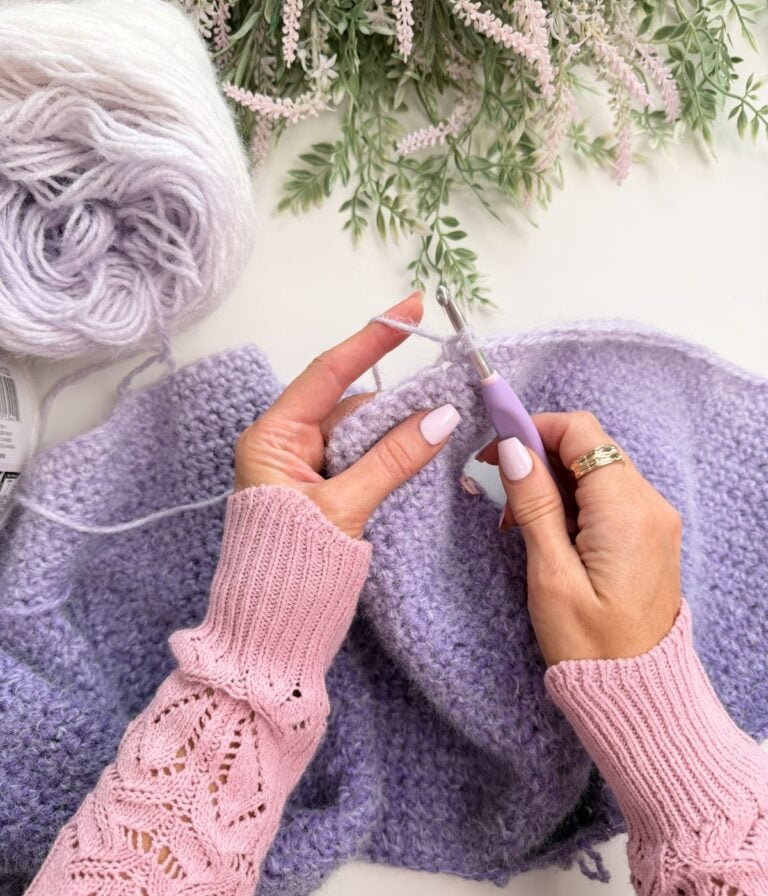
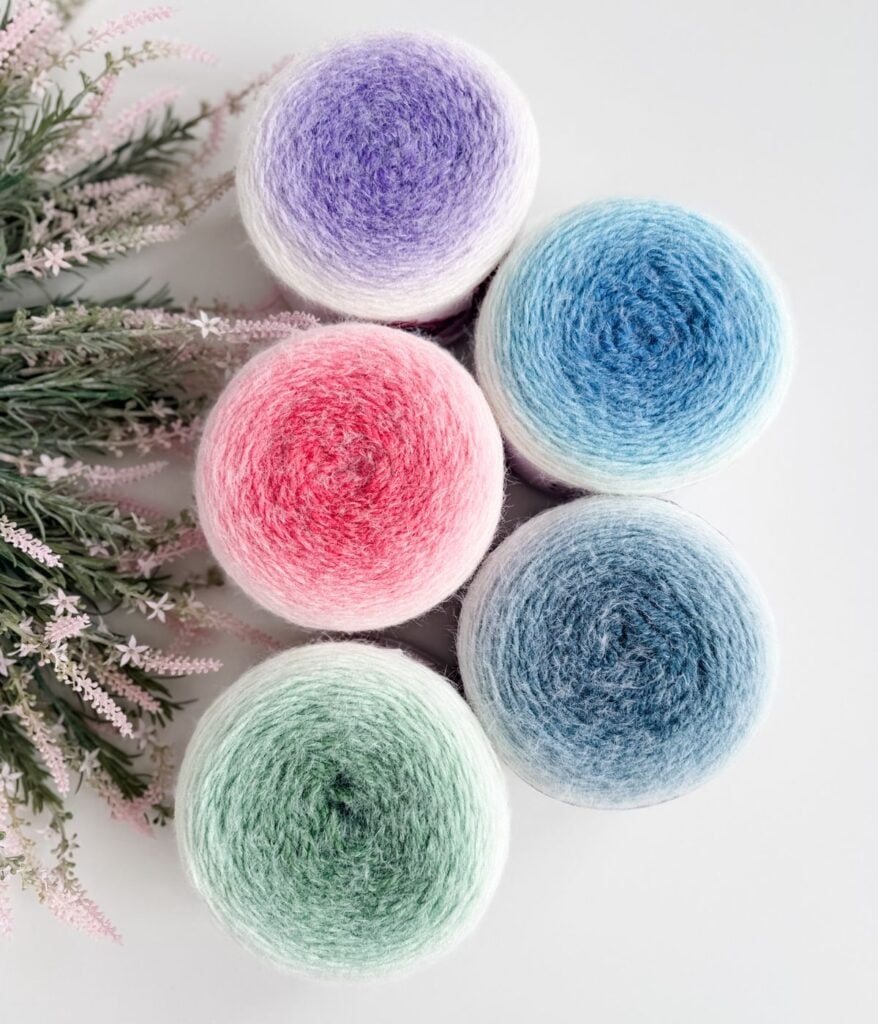
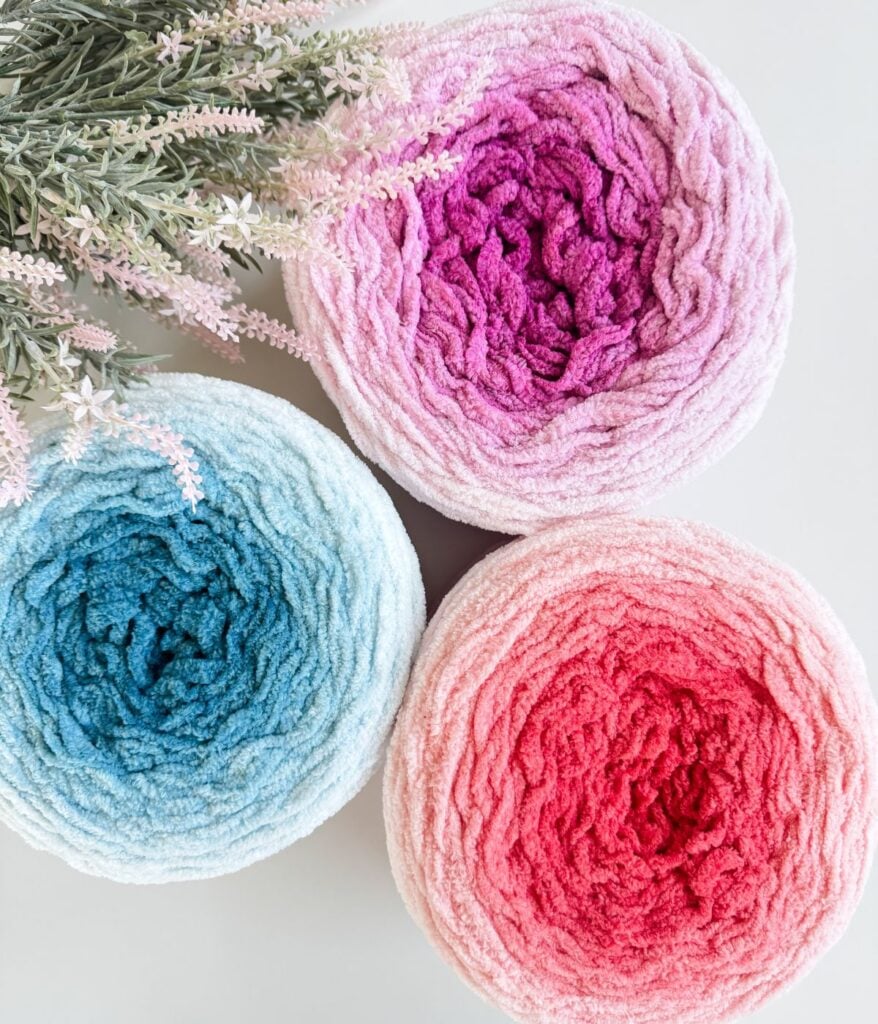
Colour-phasing yarns are designed to transition gradually from one shade to another over a long length of yarn. Unlike short colour-change yarns, where shades shift quickly and repeat often, long colour-phasing yarns create smooth, gradual fades.
Most cakes start with the darkest shade at the centre and gradually move toward the lightest shade on the outside, though this can vary slightly depending on the yarn and colourway.
Because these transitions are long and subtle, the yarn behaves almost like a design element in its own right. The fabric changes as you crochet, even when using a very simple stitch pattern.
Why Finished Projects Look Different by Size
One of the most common questions we see with colour-phasing yarns is why the same pattern looks different across sizes.
The short answer is yardage.
Larger sizes use more yarn. Smaller sizes use less. That alone can change where colour transitions land within a project. A sweater in one size may move from dark to light and stop there, while another size may cycle back into darker shades.
This is not a sizing or pattern issue. It is simply how long colour transitions occur across different yarn counts.
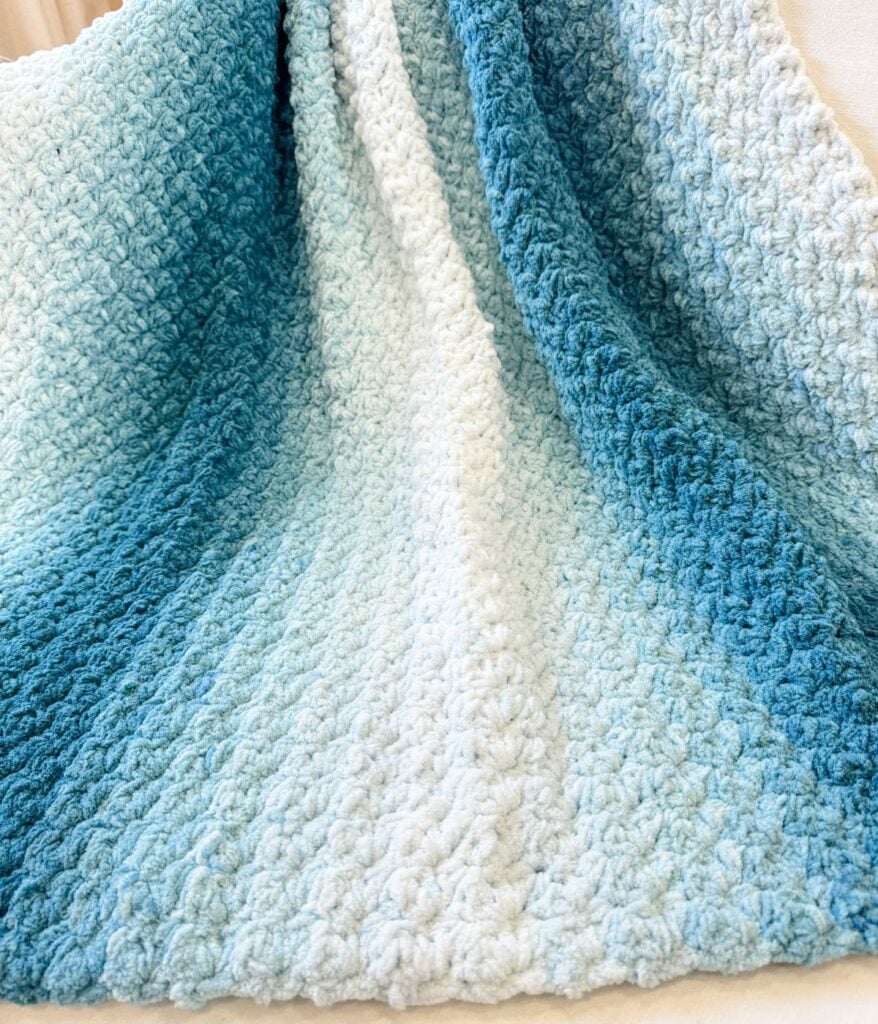
We saw this clearly with our Two-Day Throw Blanket, which was the first pattern where we worked extensively with colour-phasing yarn. We colour-corrected the sizes so the overall look remained balanced, and the pattern has continued to be very popular. Even then, every blanket still has its own personality.
Letting the Yarn Do the Work
Most of the time, our preferred approach with gradient and colour-phasing yarns is to let the yarn flow naturally.
This means crocheting directly from the cake, allowing the colours to transition as they appear. When you reach the end of a ball, simply join the next ball using the same colour you ended with so the fade continues smoothly.
This approach is easy, relaxing, and results in a one-of-a-kind finished piece every time. It is how many of our designs are intended to be made, and it is often the least stressful way to work with these yarns.
Controlling Colour Placement When You Want To
If you love a very specific look or want certain areas of a project to match more closely, you absolutely can take control of colour placement when working with colour-phasing yarns.
Some members of our community prefer their sleeves to match exactly or want colour transitions to land in specific spots within a project. This is completely doable, especially when working with simple stitches and minimal shaping.
How Yardage Impacts the Fade
That said, it is also important to understand how yardage per ball affects the finished look.
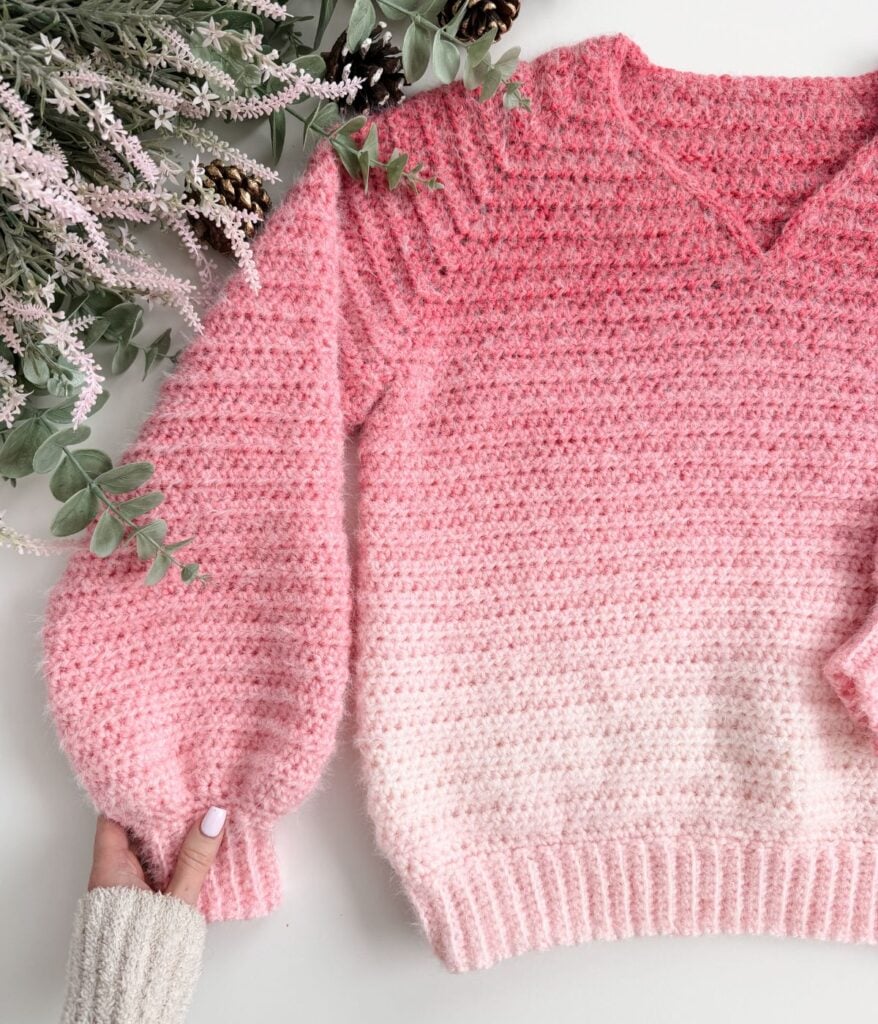
In projects like the Halo Hugs Sweater, each ball of colour-phasing yarn provides a generous yardage. On a medium-sized sweater, a single ball can take you from the collar or yoke almost all the way down to the bottom band. This creates a smooth, continuous fade, but it also means you may see less dramatic colour change within a single garment.
When sizing up, larger sizes naturally use more yarn. This allows the colour transitions to travel further, resulting in more visible shifts and a stronger ombre effect. Both outcomes are beautiful, just different.
In my own sample, I worked a medium and initially wished the fade had progressed a little further. Over time, I came to appreciate how soft and elegant that long transition feels. It is a clear example of how colour-phasing yarns behave differently by project size.
If you prefer more control or want to encourage colour changes in specific areas, you can separate your yarn cakes and plan where each colour section will be used. With yarns that have faster colour transitions, such as Prism, this may require splitting a ball so the colours flow in the same direction.
It does take a little extra checking. Yarn cakes can vary slightly, and sometimes a ball may transition differently than expected. Taking a moment to look through the cake before joining a new ball helps ensure the colours move in the direction you want.
The key is always joining new yarn using the same colour you ended with. This keeps the transitions smooth, intentional, and visually cohesive.
Long Transitions Versus Short Transitions
Not all gradient yarns behave the same way.
Yarns with shorter colour transitions create more frequent changes and often repeat more quickly. Yarns with longer transitions, like colour-phasing cakes, move much more slowly through their shades and include a lot of yardage in each ball.
This creates a softer, more blended look and often results in fewer colour changes within a single project. It can feel different if you are used to quicker transitions, but it is also what gives these yarns such an elegant finish.
Choosing the Right Project for Colour Phasing Yarns
Long colour-phasing yarns work beautifully in projects where you want visual interest without complex stitch patterns.
They are especially well-suited for garments, blankets, shawls, and longer cardigans where the colour can really move and evolve across the fabric.
If you prefer a completely uniform look with no variation, a solid yarn may be a better choice. But if you enjoy watching a project change as you work, colour-phasing yarns are incredibly satisfying.
We have another throw blanket coming soon, using Colorama Halo, and we are also working on a long cardigan that really showcases these transitions. These yarns continue to unlock many creative possibilities.
A Mindset Shift That Helps
One of the most important things to remember when making handmade clothing is that no two pieces are meant to be identical.
That is not a flaw. That is the beauty of handmade.
Colour-phasing yarns further highlight the uniqueness. You can let the yarn flow naturally, you can control the colours, you can start from dark and move to light or the other way around. You are never locked into one outcome.
Ultimately, the goal is not perfection. It is creating something you love, enjoy making, and feel proud to wear or gift.
Colour Phasing and Gradient Yarns to Explore
If you’re interested in working with colour-phasing or gradient yarns, here are a few options we’ve worked with or seen great results from in our community. Each yarn behaves slightly differently depending on the stitch choice, yardage, and project size.
- Caron Colorama Halo Perfect Phasing (CDN)
This yarn features long, smooth colour transitions and generous yardage per ball. The fades are subtle and elegant, making it a beautiful choice for garments, blankets, and larger projects where you want the colour to slowly evolve. - Mary Maxim Prism (CDN)
Prism has more frequent colour changes and a bolder gradient effect. Because transitions occur faster, some makers prefer to let the yarn flow naturally, while others colour-correct sections for greater symmetry. - Bernat Blanket Perfect Phasing
This is a plush blanket-weight yarn designed with long, controlled colour transitions. It offers a perfect phasing effect similar in concept to Colorama Halo, but in a thicker, cozier format ideal for blankets and home decor projects. - Red Heart Super Saver Ombre (CDN)
A tonal gradient yarn that shifts gently within a single colour family. This is a great option if you are new to gradient yarns and want something subtle and easy to work with. - Red Heart Roll With It Sparkle
This yarn combines colour changes with a subtle sparkle effect, creating a playful, eye-catching finish that works especially well for statement projects. - Lion Brand Mandela Gradient – This yarn is known for its consistent, repeatable colour sequences, with each ball following the same gradient order. The colour changes are smooth and evenly spaced, creating a true, perfect phasing effect that allows multiple pieces or sections of a project to match beautifully. It is an excellent choice for garments, accessories, and projects where symmetry and predictable colour placement are important.
MJ’s Off The Hook Designs Using Colour Phasing or Gradient Yarns
We’ve used colour phasing and gradient yarns across many of our designs, and they remain favourites with our community. If you’d like to see how these yarns work up in finished projects, here are a few examples.
- Winter Forest Mosaic Blanket – Made with Red Heart Ombré, this blanket demonstrates how subtle colour changes can add depth and visual interest to a mosaic stitch pattern.
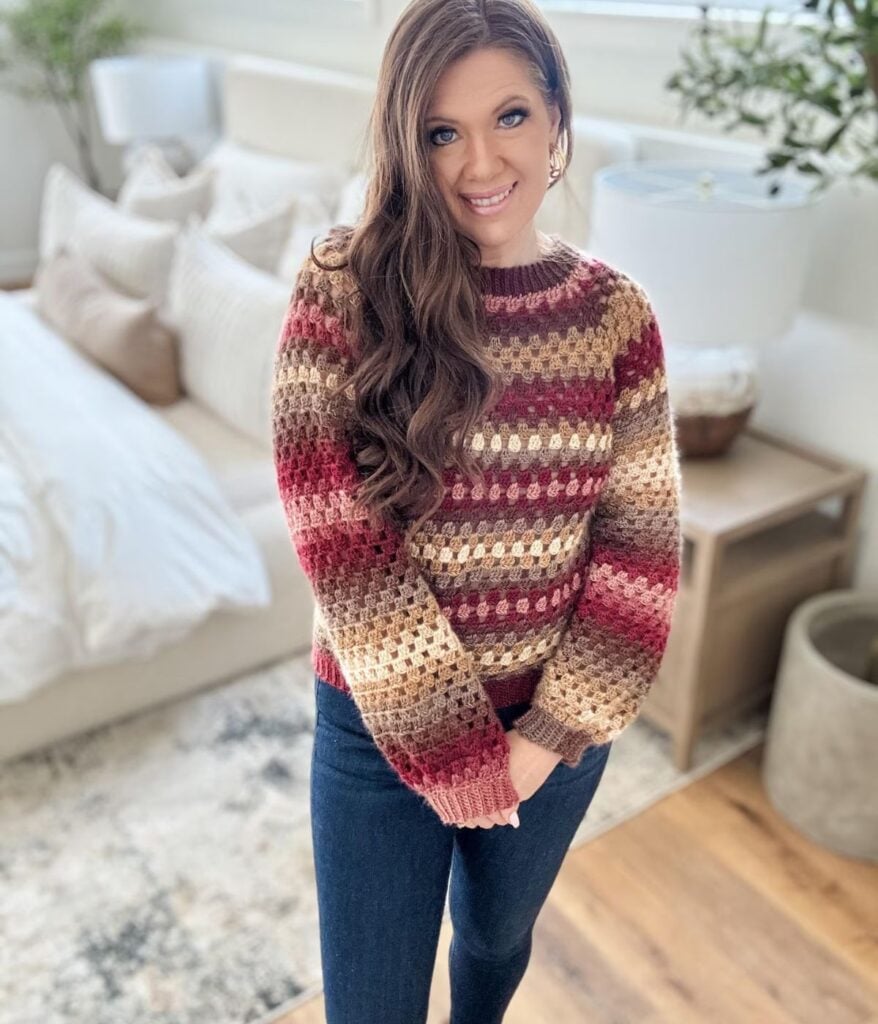
- Granny Pop Pullover – One of our most popular garment designs, this pullover uses Mary Maxim Prism yarn to highlight bold colour transitions in a fun, modern silhouette.
- Granny Pop Cardigan – Designed alongside the pullover, this cardigan also features Prism yarn and shows how the same gradient yarn can look completely different depending on garment shape and size.
- Halo Hugs Pullover – Designed using Caron Colorama Halo Perfect Phasing yarn, this sweater highlights long, smooth colour transitions while allowing the yarn to flow naturally across different sizes.
- Two-Day Throw Blanket – This design uses Bernat Blanket Perfect Phasing yarn, which features long, intentional colour transitions. Extra care was taken to colour-correct sizing so the overall look remains balanced while still allowing every finished blanket to be beautifully unique.
- Rainbow Sparkle Mermaid Blanket – Made with Red Heart Roll With It Sparkle, this design features colour changes and shimmer for a playful, standout finish.
Each of these patterns can be worked by letting the yarn flow naturally or by taking more control over colour placement, depending on your personal preference and the finished look you want.
The Beauty of Creating Something Unique
At the end of the day, perfection is not always the goal. Sometimes, a little uniqueness and variation is exactly what makes a project feel special. In the Granny Pop Pullover, I chose not to control the colour placement at all, and I love how the sleeves didn’t end up identical. That organic variation is part of the charm of working with colour phasing and gradient yarns. Each piece becomes its own expression, shaped by the yarn, the size, and the way it unfolds as you crochet. Embracing that individuality allows you to enjoy the process more fully and appreciate the beauty of a finished piece that is truly one of a kind.
Helpful Resources
- Join our Facebook Crochet Community for pattern support and inspiration
- Subscribe on YouTube for hundreds of free tutorials
- Sign up for our newsletter and receive 40% off your first Ravelry purchase!
- Sign up for our YouTube Membership
This post is written by Michelle Moore of MJ’s Off The Hook Designs Inc, based in Lakefield, Ontario, Canada. Your go-to source for modern, easy crochet patterns. Published on February 2, 2026.
Thank you for visiting MJ’s Off The Hook Designs. You can find more crochet patterns in our Ravelry and Etsy shops.
For daily inspiration and behind-the-scenes peeks, join me over on Facebook or Instagram, or join our YouTube Membership for exclusive content!
You’ve got questions, we’ve got a community!
Crocheting is better with friends! Join our group to post pictures and ask all your pattern support questions.