*This post may contain affiliate links to support the cost of this blog. At no cost to you, I may make a small commission if you purchase through these links. Read our Privacy Policy HERE
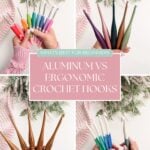
When you’re learning to crochet, the hook you choose has a big impact on how comfortable and enjoyable the process feels. The right hook helps you form stitches more easily, maintain even tension, and crochet without unnecessary strain. The wrong hook can make everything feel awkward, tight, or frustrating.
While you don’t need a large hook collection to get started, choosing a beginner-friendly hook will make learning much smoother.
Understanding Crochet Hook Sizes
Crochet hook sizes refer to the thickness of the hook. Larger hooks create larger stitches, while smaller hooks create tighter stitches.
For beginners, a 5.0 mm or 5.5 mm crochet hook paired with worsted-weight yarn is an excellent place to start.
This size range:
- Creates stitches that are easy to see
- Helps prevent overly tight tension
- Works with many beginner patterns
- Feels comfortable for most hands
Starting with a hook that’s too small can make stitches difficult to pull through, while a hook that’s too large can result in loose, uneven fabric.
Common Crochet Hook Materials
Crochet hooks come in a variety of materials, and each one feels slightly different in your hand.
Aluminum Hooks
- Smooth and lightweight
- Yarn glides easily
- Widely available and affordable
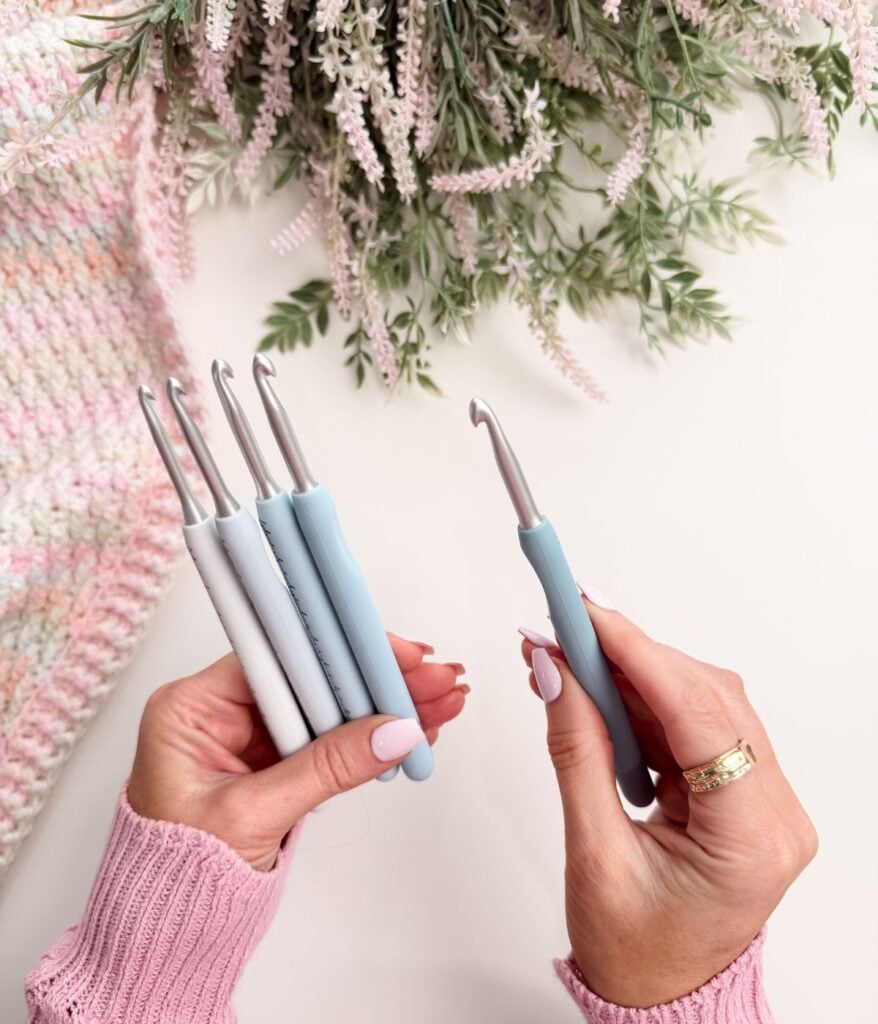
Aluminum hooks are a popular choice for beginners because they make forming stitches easier and don’t snag the yarn.
Bamboo or Wooden Hooks
- Warm, natural feel
- Slight grip on the yarn
- Lightweight
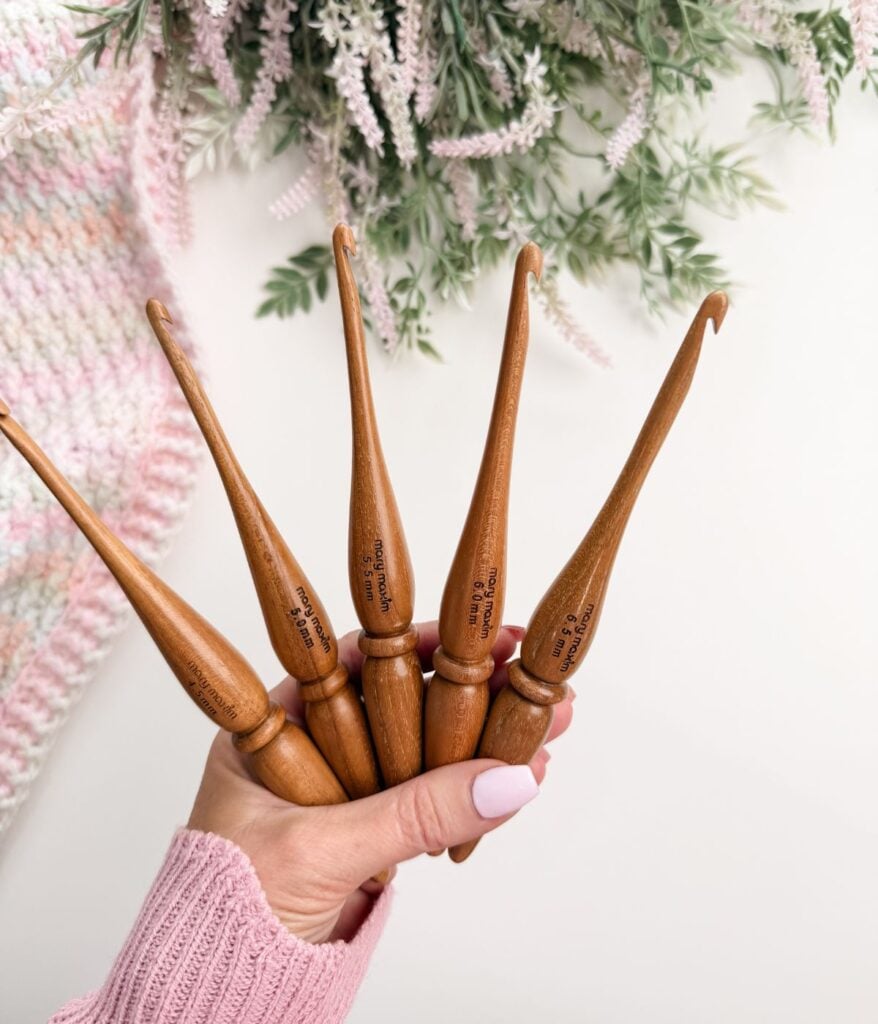
These hooks can feel nice in the hand, but some beginners find the added grip slows them down while learning.
Plastic Hooks
- Lightweight
- Often available in larger sizes
- Budget friendly
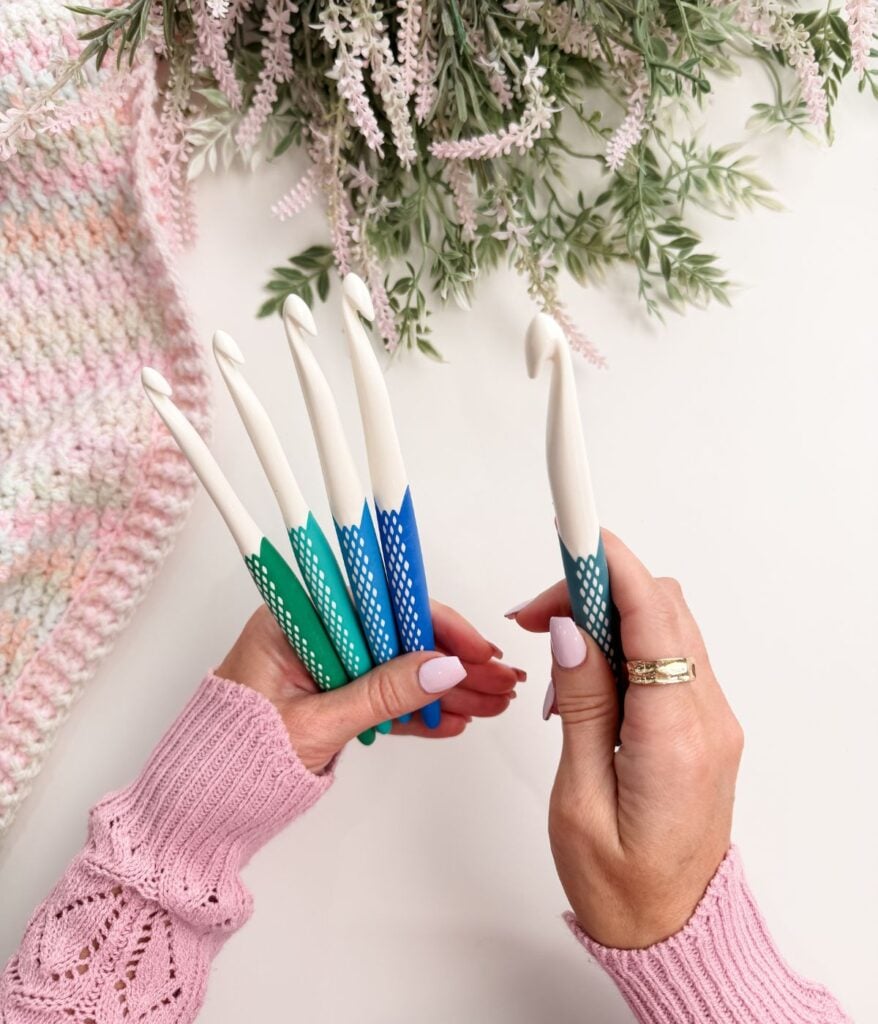
Plastic hooks can work well, though quality and smoothness vary by brand.
Ergonomic Hooks
- Designed for comfort
- Reduce hand fatigue
- Ideal for longer crochet sessions
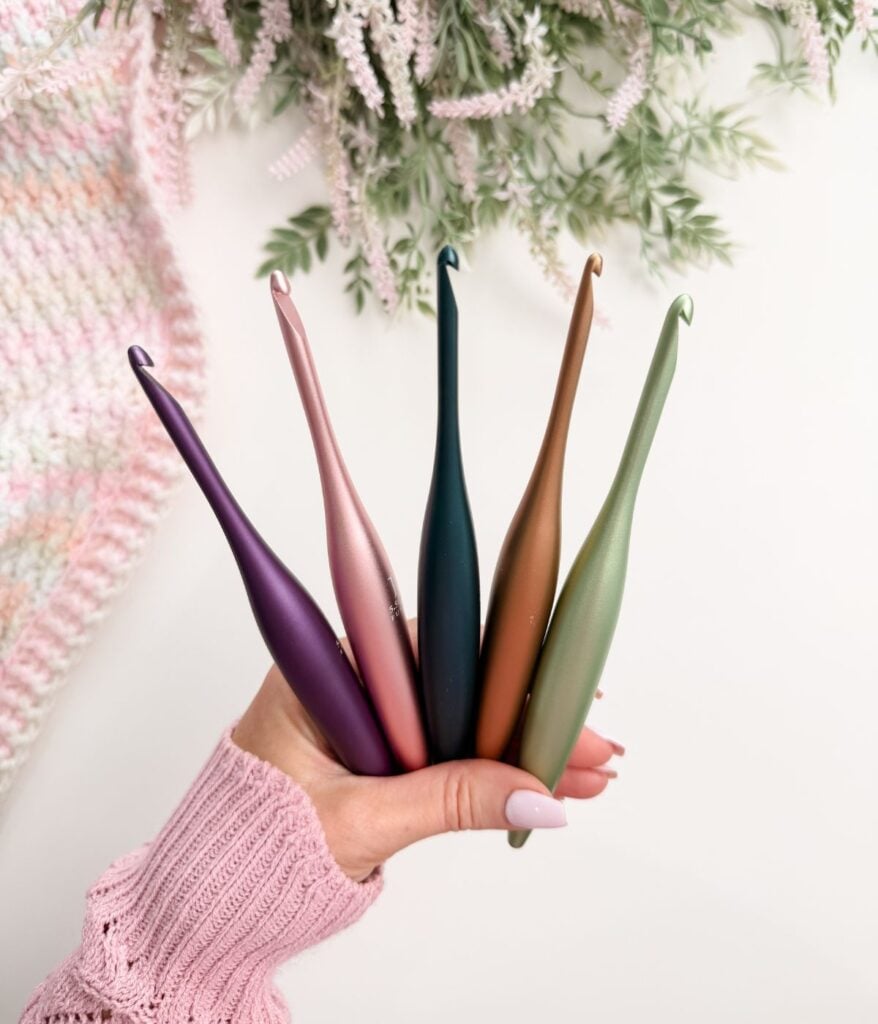
If you plan to crochet often, a hook with a comfortable grip can make a big difference, especially as you build speed and confidence.
Tapered vs Inline Crochet Hooks
Not all crochet hooks are shaped the same. In addition to size and material, the shape of the hook head can affect how your stitches form and how your fabric looks. The two most common head styles are tapered and inline.
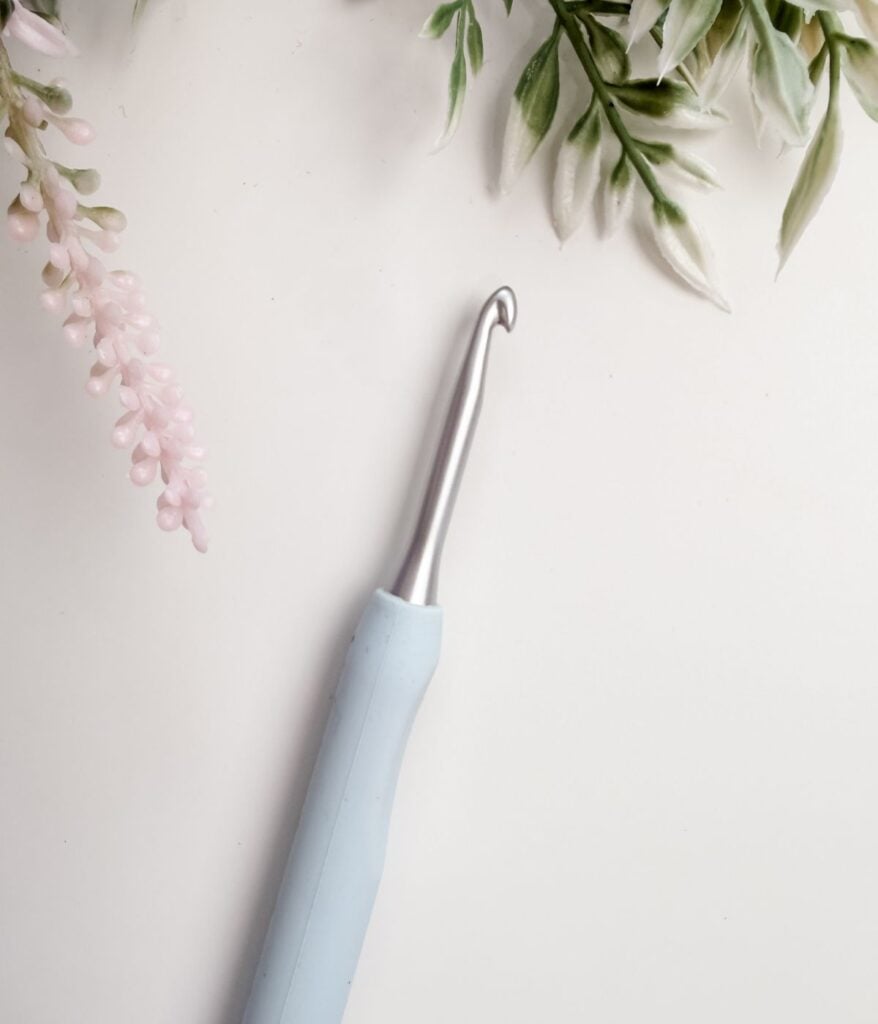
Tapered Crochet Hooks
- Rounded head
- Slightly narrower throat
- Gradual transition from shaft to hook
- Common in brands like Boye
Tapered hooks often glide smoothly through stitches and can feel forgiving while you are learning stitch motion. Some beginners find they move more easily through yarn, especially when working tighter stitches.
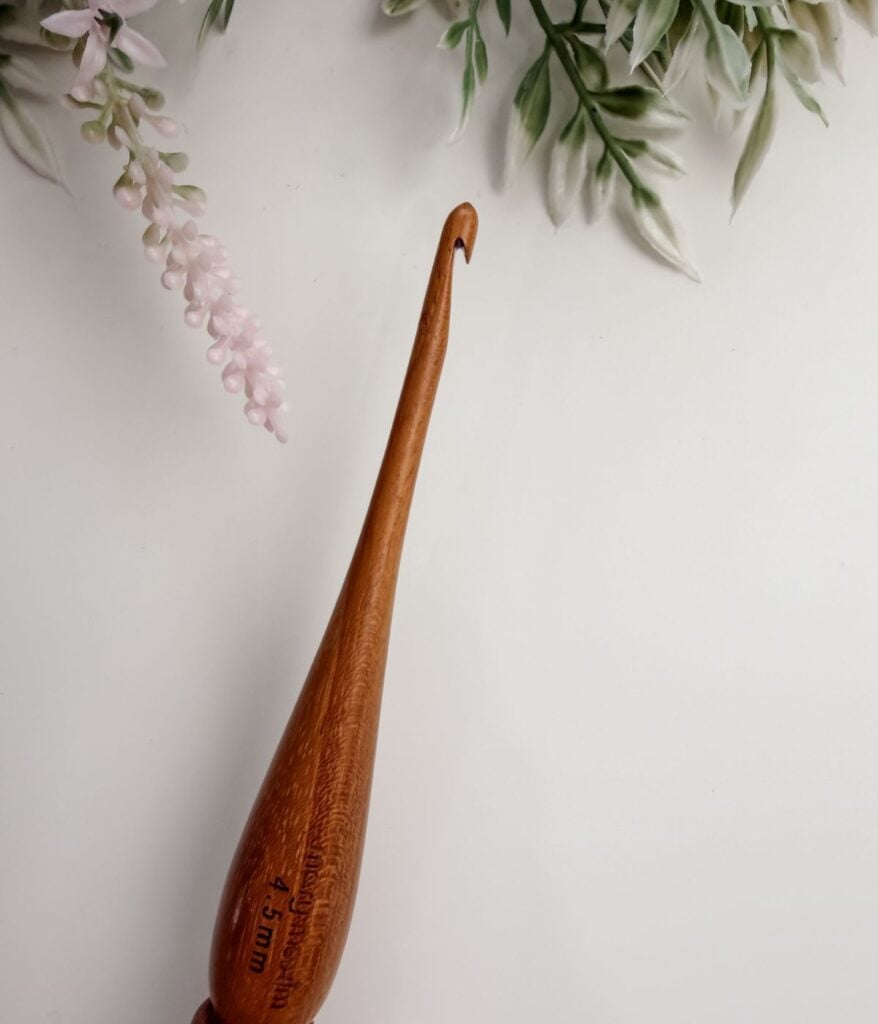
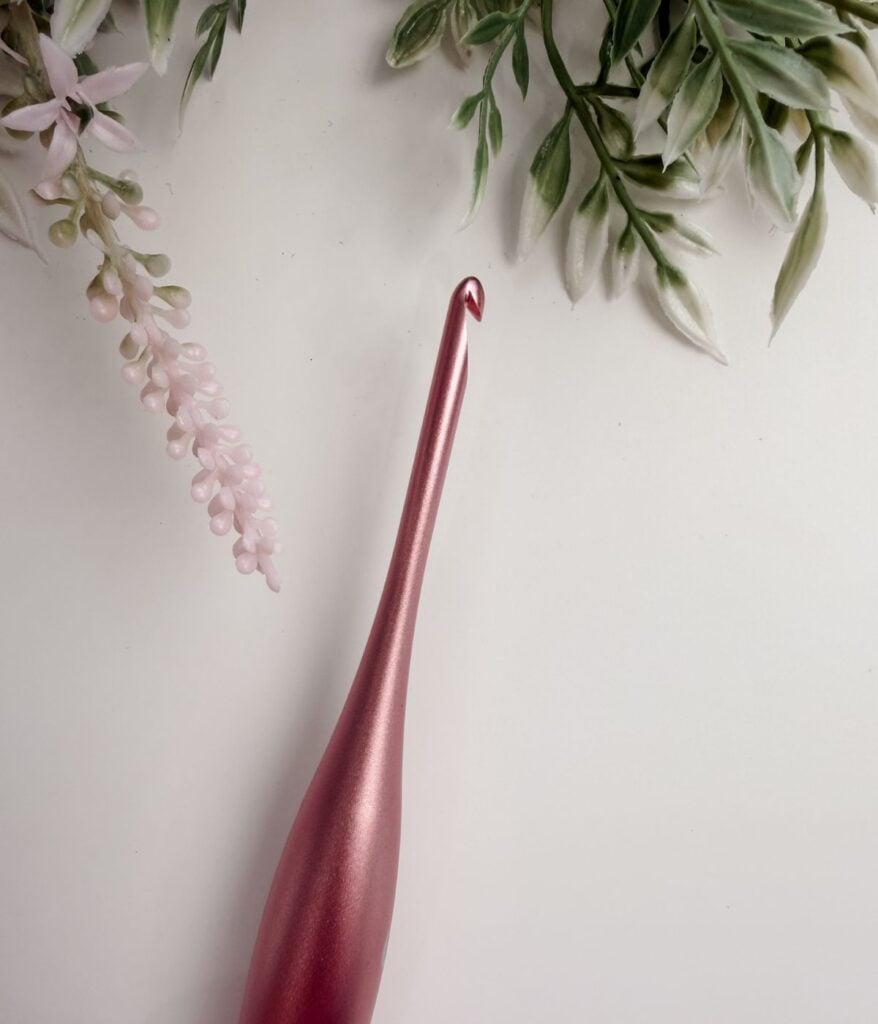
Inline Crochet Hooks
- Head and shaft are the same width
- Deeper throat
- More defined point
- Common in brands like Susan Bates
Inline hooks tend to produce more uniform stitch sizes because the hook head matches the shaft width. Many crocheters prefer them for consistent tension and structured projects.
Which One Is Better?
There is no universal “best” option. The right choice depends on your personal preference, tension style, and the type of fabric you want to create.
If you are just starting out, choose the hook that feels comfortable in your hand and allows you to form even stitches without strain. If possible, try both styles to see which one feels more natural for you.
My Crochet Hook Recommendations for Beginners
Comfort matters, especially when you’re practising and building muscle memory.
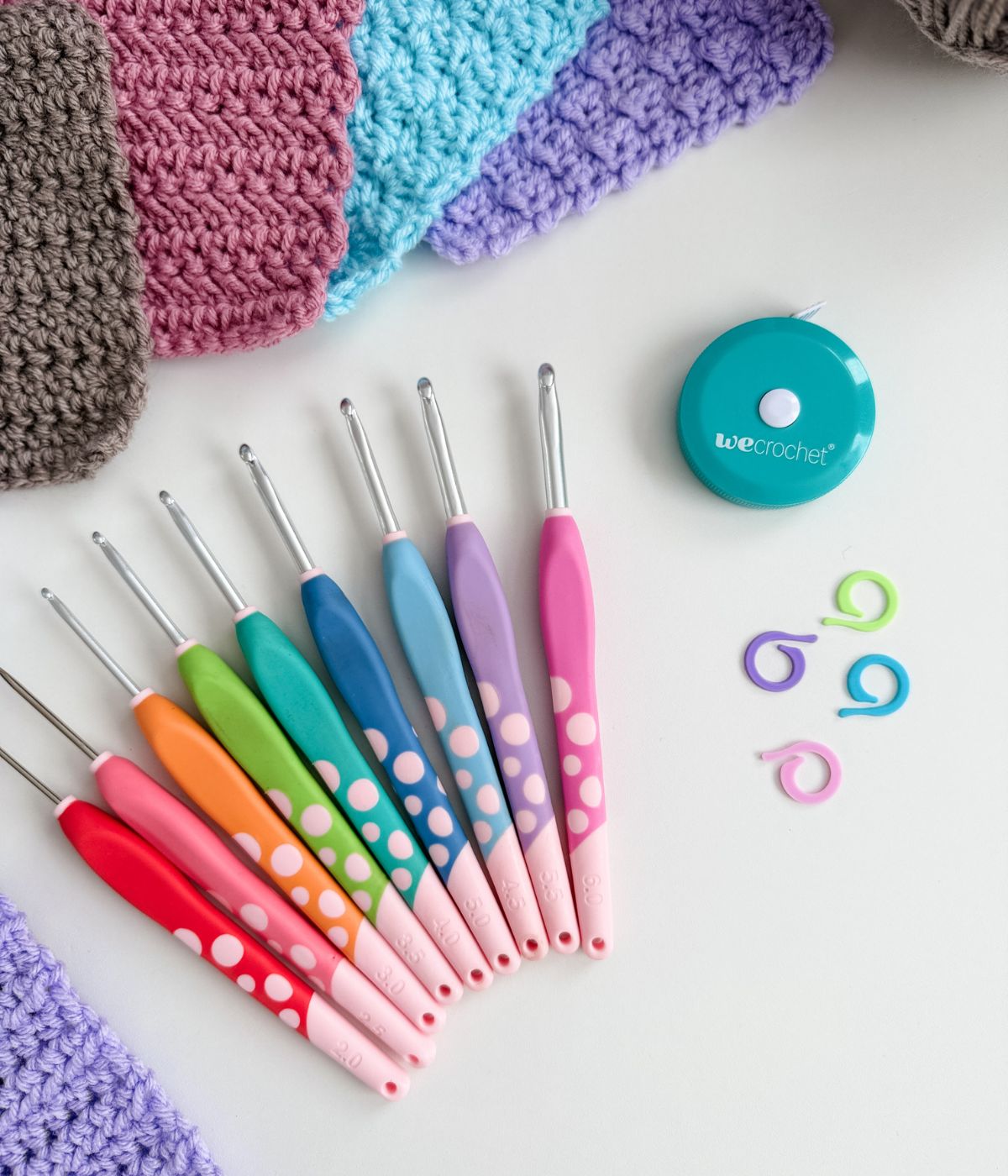
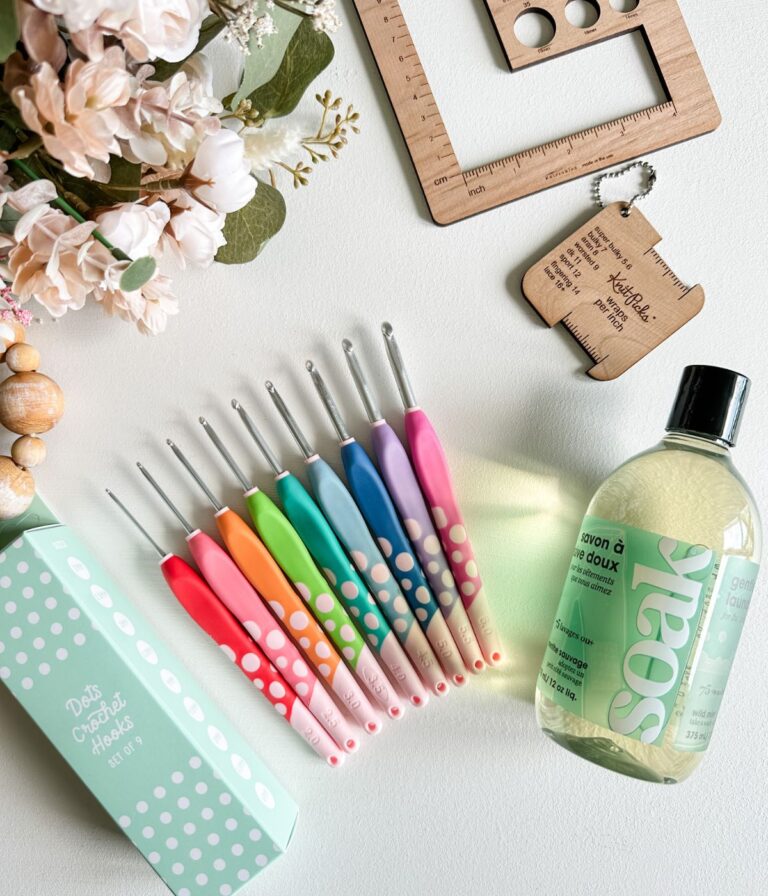
One of my favourite beginner-friendly options is the Dots Crochet Hook Set from WeCrochet. It is an affordable set and includes a comfortable grip, which I strongly recommend for beginners. I also find that the hook head sits somewhere between a tapered and inline style, giving you a nice balance of glide and consistency, which makes it a great starter hook.
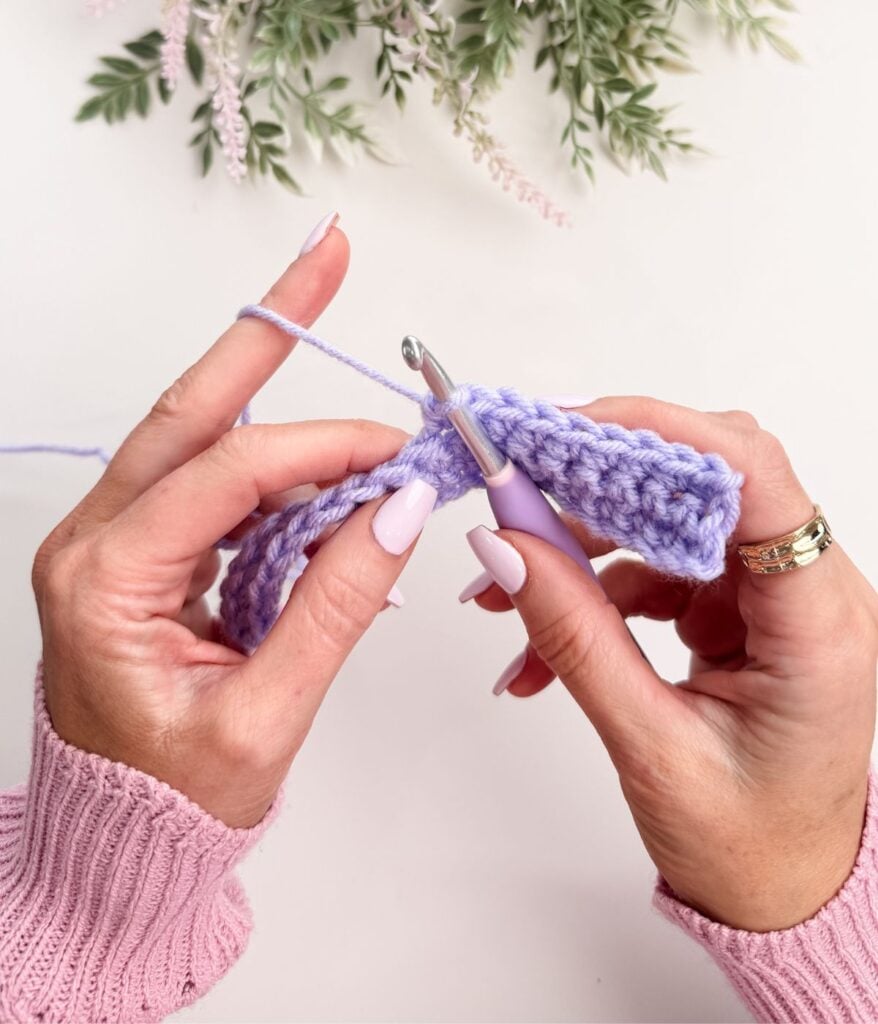
When I first started crocheting, I used Susan Bates hooks. They’re very affordable and widely available, which makes them a common starting point. Over time, though, I found that I really needed a handle for comfort, especially as I started crocheting more and for longer periods.
Another commonly used beginner option is Boye hooks. These are also affordable and easy to find. If you know hand comfort is important to you, I recommend choosing a hook with a grip right from the start.
A Practical Tip About Hook Brands
One thing many crocheters don’t realize early on is that the hook brand can affect gauge.
Even if two hooks are labelled the same size, different brands can produce slightly different stitch sizes. Switching hooks mid-project, even within the same size, can change your tension and fabric density.
To avoid this:
- Stick with the same hook brand throughout a project
- Make a note of the hook size and brand you’re using
- Keep the hook with the project if you put it away
This is especially important for garments and fitted projects.
How Many Hooks Do You Really Need?
When you’re just starting out, you don’t need a full hook set.
At a minimum, you need:
- One or two hooks in the 5.0 mm to 5.5 mm range
As you gain experience, your hook collection will naturally grow based on the projects you enjoy making. Hooks are also easy to misplace, so having a few extras can be helpful.
Affordable vs Premium Hooks
You don’t need expensive hooks to learn how to crochet.
Affordable hooks work beautifully for beginners. Over time, you may choose to invest in higher-end hooks such as Furls or Clover for comfort or preference, but that’s optional.
The best hook is the one that feels good in your hand and allows you to crochet comfortably.
Other Beginner Crochet Tools
Beyond your crochet hook, these simple tools will make learning easier and help your projects look polished from the start:
- Yarn scissors – A small, sharp pair for cleanly cutting yarn.
- Tapestry needle – Also called a yarn needle, used for weaving in ends and sewing pieces together.
- Stitch markers – Helpful for marking the beginning of rounds or keeping track of stitch counts.
- Measuring tape – Essential for checking gauge and finished measurements.
These tools are inexpensive but important. Having them ready from the beginning will save frustration and help you build strong crochet habits.
Learn to Crochet With MJ Beginner Basics
What’s Next
Now that you understand crochet hook sizes, materials, and how to choose a comfortable hook, the next step is learning how to hold your crochet hook.
Helpful Resources
- Join our Facebook Crochet Community for pattern support and inspiration
- Subscribe on YouTube for hundreds of free tutorials
- Sign up for our newsletter and receive 40% off your first Ravelry purchase!
- Sign up for our YouTube Membership
This lesson is part of the Learn to Crochet course by Michelle Moore of MJ’s Off The Hook Designs Inc, based in Lakefield, Ontario, Canada.
Thank you for learning with me at MJ’s Off The Hook Designs. I hope this lesson encourages you to keep practising and enjoying the process of crochet.
You’ve got questions, we’ve got a community!
Crocheting is better with friends! Join our group to post pictures and ask all your pattern support questions.