*This post may contain affiliate links to support the cost of this blog. At no cost to you, I may make a small commission if you purchase through these links. Read our Privacy Policy HERE
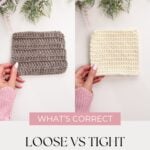
In crochet, tension refers to how tightly or loosely you hold your yarn and form your stitches. It affects the size of your stitches, the appearance of your fabric, and how your finished project fits.
Tension is one of the most talked-about topics in crochet, especially for beginners. It’s also one of the most misunderstood. Many new crocheters think tension is something you need to master right away, but in reality, it develops naturally with practice.
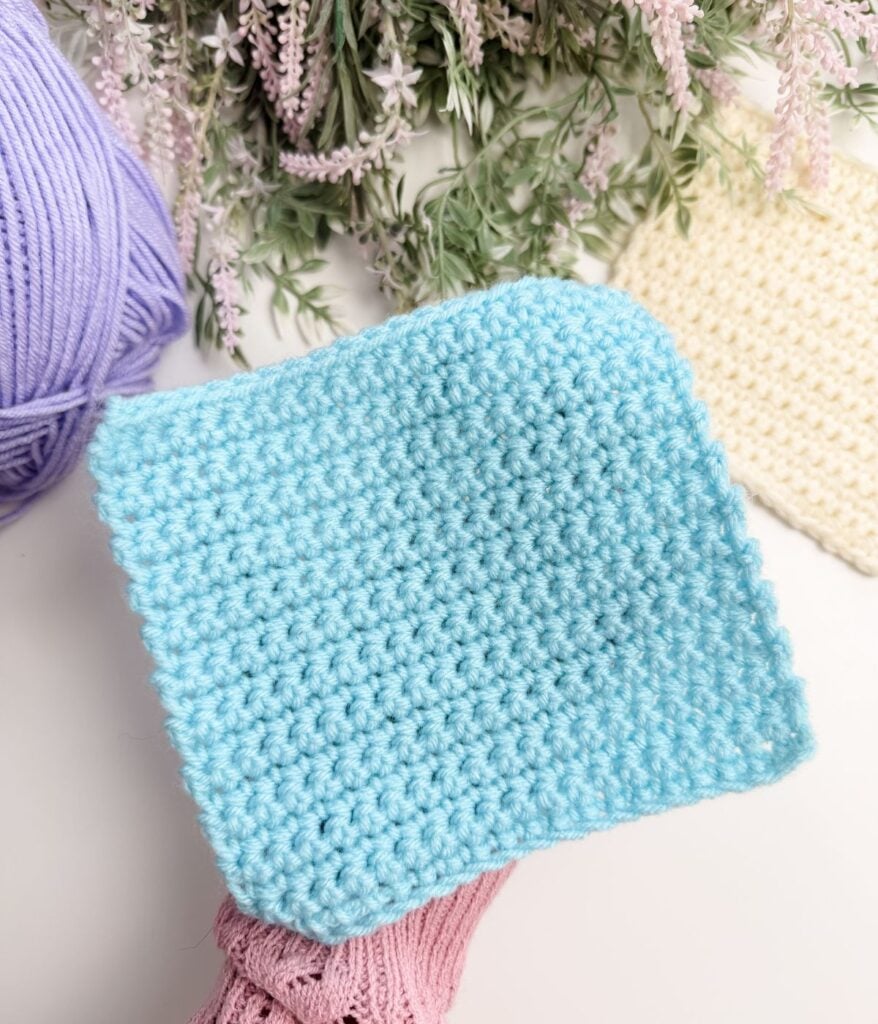
Why Tension Matters
Your tension impacts more than just how your stitches look.
Good, consistent tension helps:
- Create even, balanced stitches
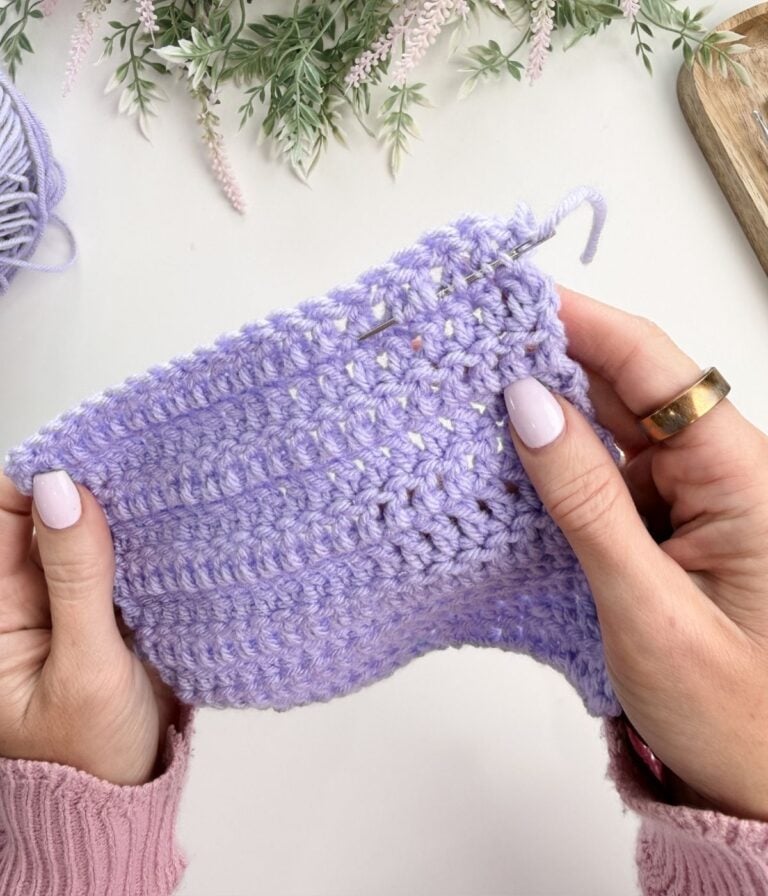
- Make your fabric look neat and uniform.
- Ensure projects turn out the correct size
- Improve overall confidence while crocheting
When tension is inconsistent, you may notice:
- Stitches that vary in size
- Edges that flare or pull in
- Projects that don’t match the expected measurements
This is very common when you’re learning.
Tight Tension vs Loose Tension
Understanding whether your tension is tight or loose can help you troubleshoot early.
Tight Tension
Signs of tight tension include:
- Difficulty inserting your hook into stitches
- Yarn that feels hard to pull through
- Stiff or dense fabric
If your tension is tight, crocheting can tire your hands and wrists.
Loose Tension
Signs of loose tension include:
- Gaps between stitches
- Fabric that feels floppy or uneven
- Difficulty identifying individual stitches
Loose tension can make counting stitches more difficult, especially for beginners.
Why Tension Is Often a Beginner’s Struggle
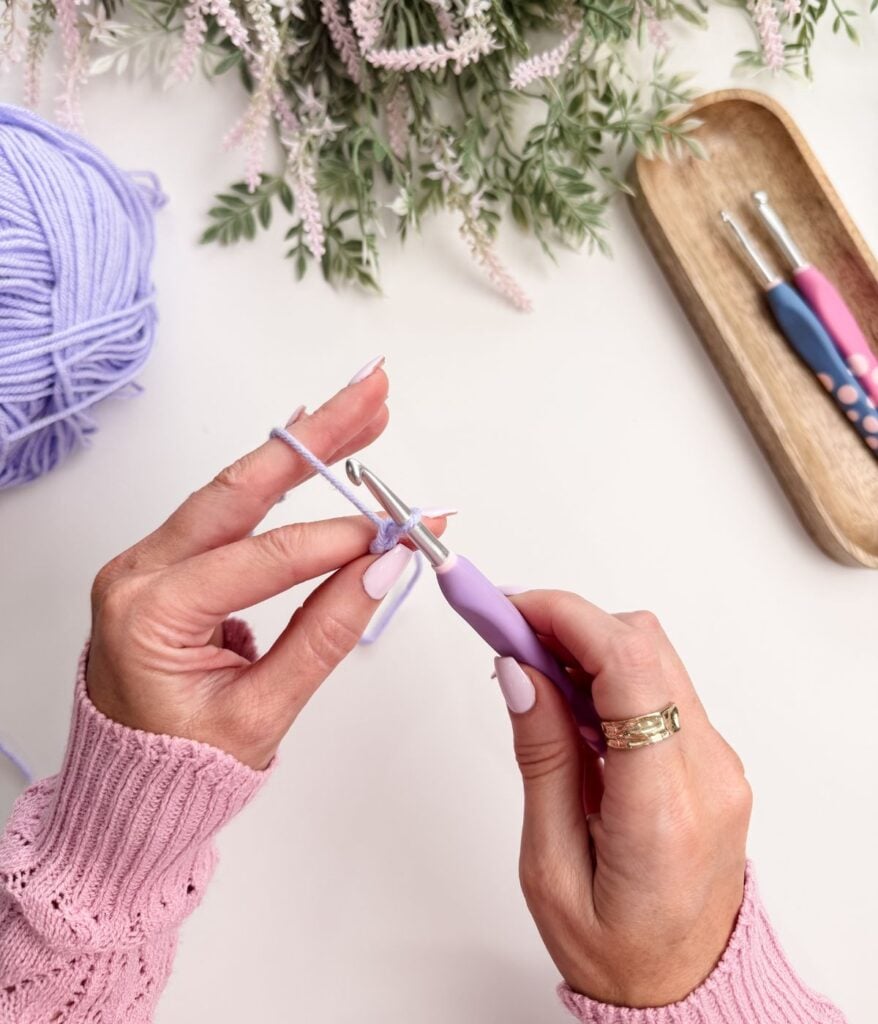
Tension is closely tied to muscle memory. When you’re new to crochet, your hands are learning:
- How to hold the hook
- How to hold the yarn
- How much yarn to feed to each stitch
That’s a lot to coordinate at once.
When I was learning, my stitches were uneven and inconsistent, and that’s something I see constantly in beginners. It’s not a sign that you’re doing anything wrong. It’s simply part of the learning process.
How Tension Improves Naturally
The good news is that tension improves on its own with repetition.
As you practice:
- Your hands learn how much yarn to feed
- Movements become smoother
- Stitches become more consistent
This happens naturally over time. You don’t need to force perfect tension from the start.
Simple Tips to Improve Tension
If you’re struggling with tension, try the following:
- Slow down your crocheting
- Relax your hands and shoulders
- Avoid gripping the hook or yarn too tightly
- Focus on making smooth, even movements
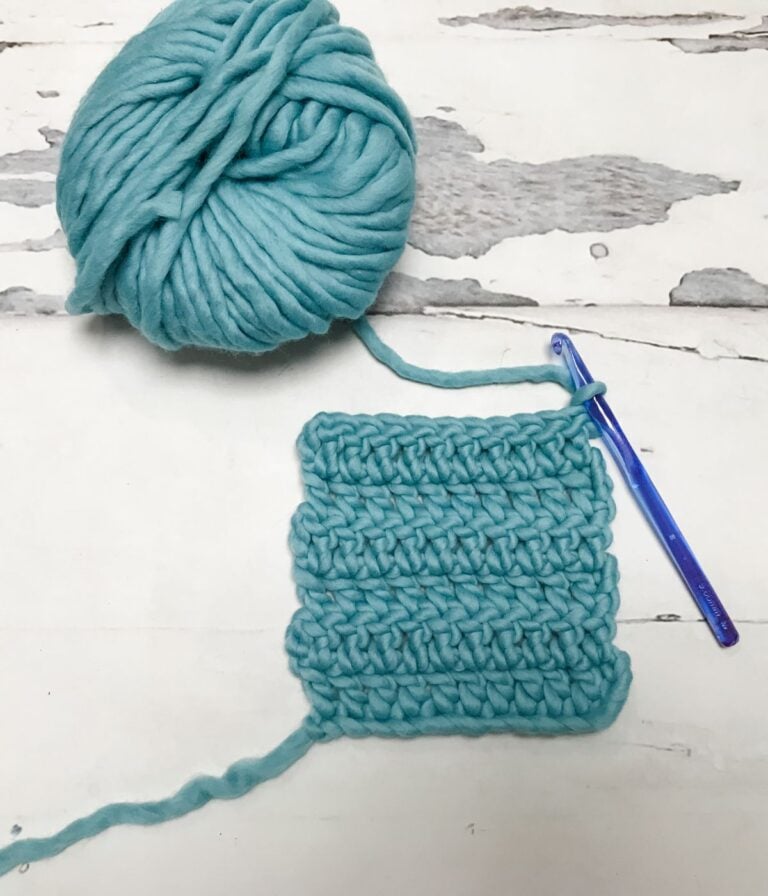
- Practice with simple swatches
Sometimes, even changing your hook size slightly can make a noticeable difference.
Don’t Chase Perfect Tension Too Early
One of the biggest mistakes beginners make is focusing too much on perfect tension right away.
Uneven stitches at the beginning are normal. Your goal in the early stages is not perfection, but comfort and consistency.
As long as you’re practising and paying attention to how your stitches feel, your tension will improve.
When Tension Really Matters
While tension naturally evens out with practice, it becomes especially important when:
- Making garments
- Working with fitted items like hats
- Following patterns that rely on gauge
We’ll cover gauge in much more detail later in the course and explain how tension, hook size, and yarn choice all work together.
Frogging Is Part of Learning
If something doesn’t look right, don’t be afraid to pull back your work and try again. Crochet is forgiving, and frogging is a normal part of the process.
I’ve had to frog many projects over the years, and I still do. Sometimes things don’t work out the first time, and that’s okay.
Learn to Crochet with MJ Beginner Basics
What’s Next
Now that you understand what tension is and how it improves over time, you’re ready to start making your first stitches.
Helpful Resources
- Join our Facebook Crochet Community for pattern support and inspiration
- Subscribe on YouTube for hundreds of free tutorials
- Sign up for our newsletter and receive 40% off your first Ravelry purchase!
- Sign up for our YouTube Membership
This lesson is part of the Learn to Crochet course by Michelle Moore of MJ’s Off The Hook Designs Inc, based in Lakefield, Ontario, Canada.
Thank you for learning with me at MJ’s Off The Hook Designs. I hope this lesson encourages you to keep practising and enjoying the process of crochet.
You’ve got questions, we’ve got a community!
Crocheting is better with friends! Join our group to post pictures and ask all your pattern support questions.