*This post may contain affiliate links to support the cost of this blog. At no cost to you, I may make a small commission if you purchase through these links. Read our Privacy Policy HERE
Holding your yarn correctly is about more than comfort. It directly affects your tension, stitch consistency, and the overall enjoyment of crochet.
This is one of the most challenging steps for beginners, and that’s completely normal. Once yarn holding clicks, everything else becomes much easier.
What You’ll Learn in This Lesson
In this lesson, you’ll learn:
- Why yarn holding affects tension and stitch quality
- Common ways to hold yarn
- How to find a yarn hold that works for you
- Tips for reducing hand fatigue while crocheting
If you prefer learning visually, this lesson is demonstrated in video form here:
https://youtu.be/05Klgb3kDD0
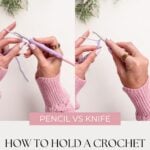
Pencil Hold vs Knife Hold
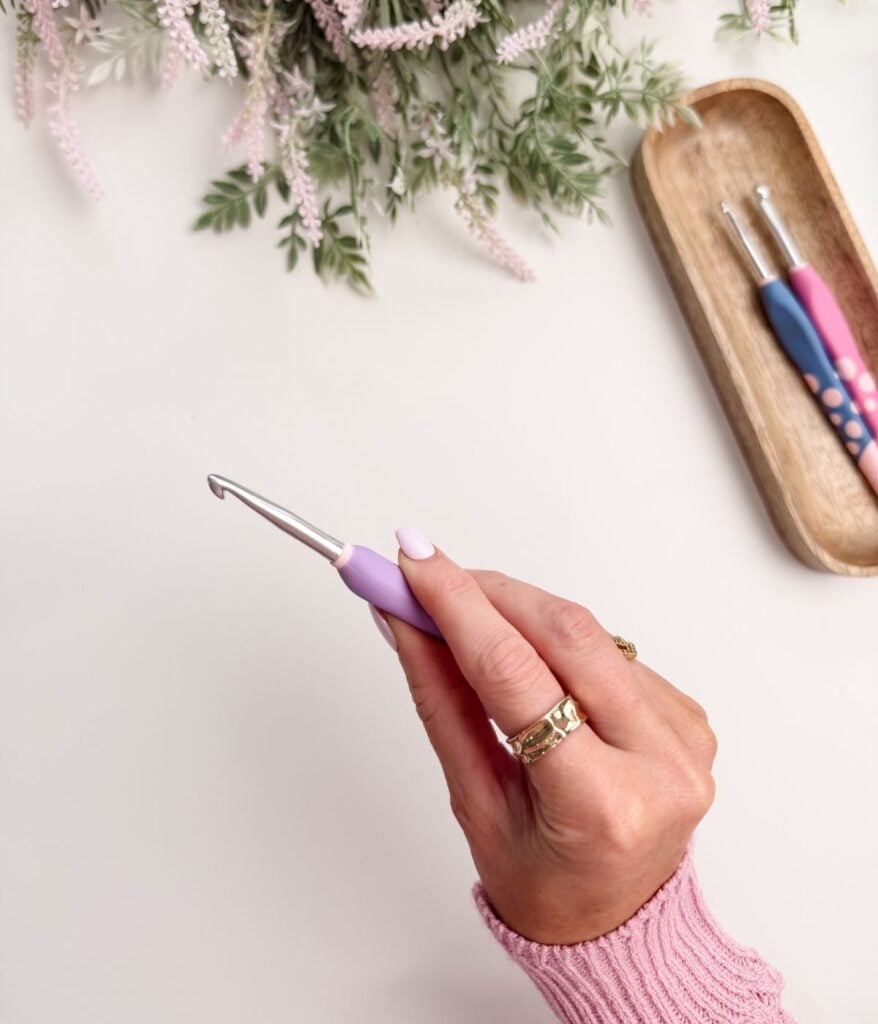
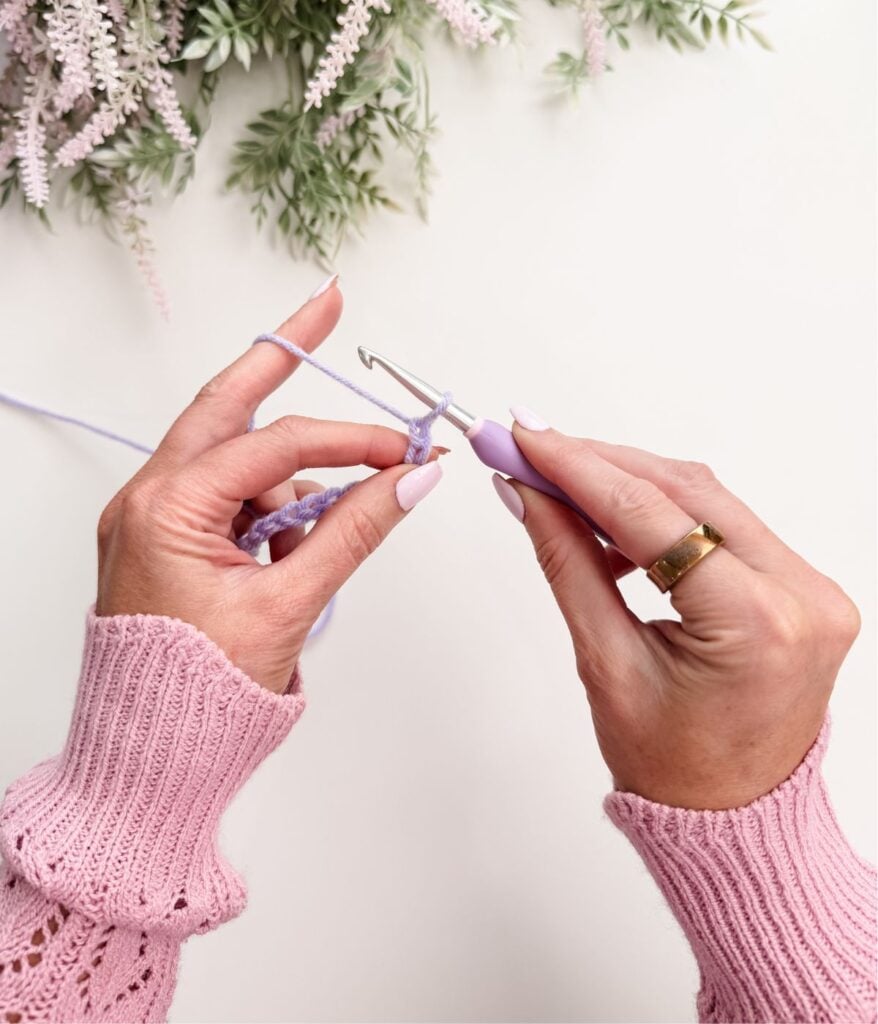
Before we talk about yarn holding, it’s important to understand how you hold your crochet hook.
There are two main ways to hold a crochet hook: the pencil hold and the knife hold. Neither is right or wrong. The best choice is the one that feels natural and comfortable in your hand.
Pencil Hold
The pencil hold is similar to how you hold a pencil when writing.
How it works:
• The hook rests between your thumb and index finger
• The handle is supported by your middle finger
• Your hand stays slightly above the hook
This hold allows for smaller, more precise movements and can feel natural if you are used to writing or drawing for long periods.
Knife Hold
The knife hold is similar to how you would hold a table knife.
How it works:
• Your hand rests over the hook
• Your thumb and index finger pinch the grip area
• The handle rests in your palm
This hold uses more of your hand and wrist, which some crocheters find more comfortable for longer sessions.
Which Hold Should You Use?
Try both.
Crochet a few rows using each hold and notice:
• Which feels more relaxed
• Which gives you better control
• Which causes less hand fatigue
Your hook hold and your yarn hold work together. Once both feel natural, your stitches will become more consistent and your tension easier to control.
How Yarn Holding Affects Tension and Flow
Tension refers to how tightly or loosely you crochet, and it’s influenced most by how the yarn feeds to your hook.
A good yarn hold allows:
- Smooth, consistent yarn flow
- Even stitches
- Better stitch visibility
- Less strain on your hand
If your yarn feels jerky or tight as you work, your stitches will often look uneven, even if your hook placement is correct.
Common Ways to Hold Yarn
There is no single correct way to hold yarn. Everyone’s hands are different, and what matters most is finding a method that feels natural and relaxed.
Below are a few common yarn holds that work well for beginners and are shown in the video above.
Over the Index Finger Hold
This is one of the most common beginner yarn holds.
How it works:
- The yarn comes from the ball
- It passes over your index finger
- It feeds directly to the hook
This method offers good control and helps maintain even tension.
Over the Middle Finger Hold
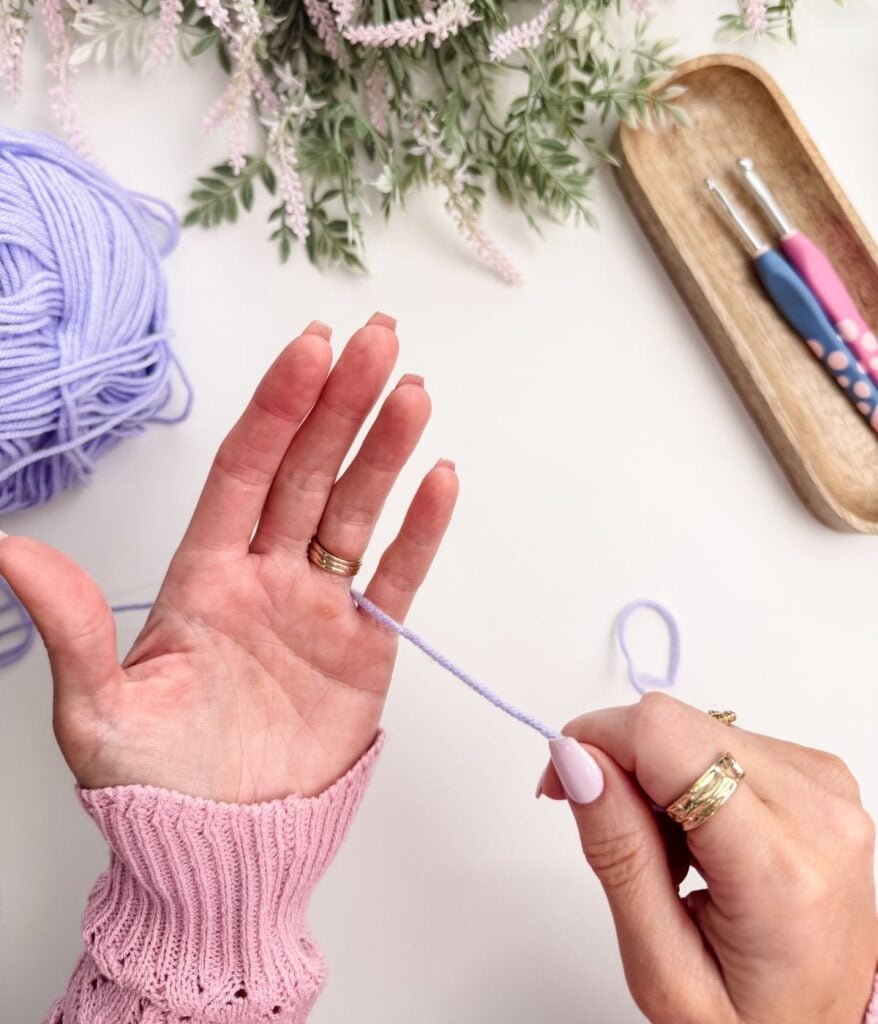
This is the yarn hold I personally use and teach because it creates consistent, even tension while still allowing flexibility as you crochet.
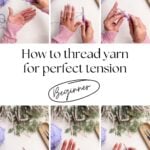
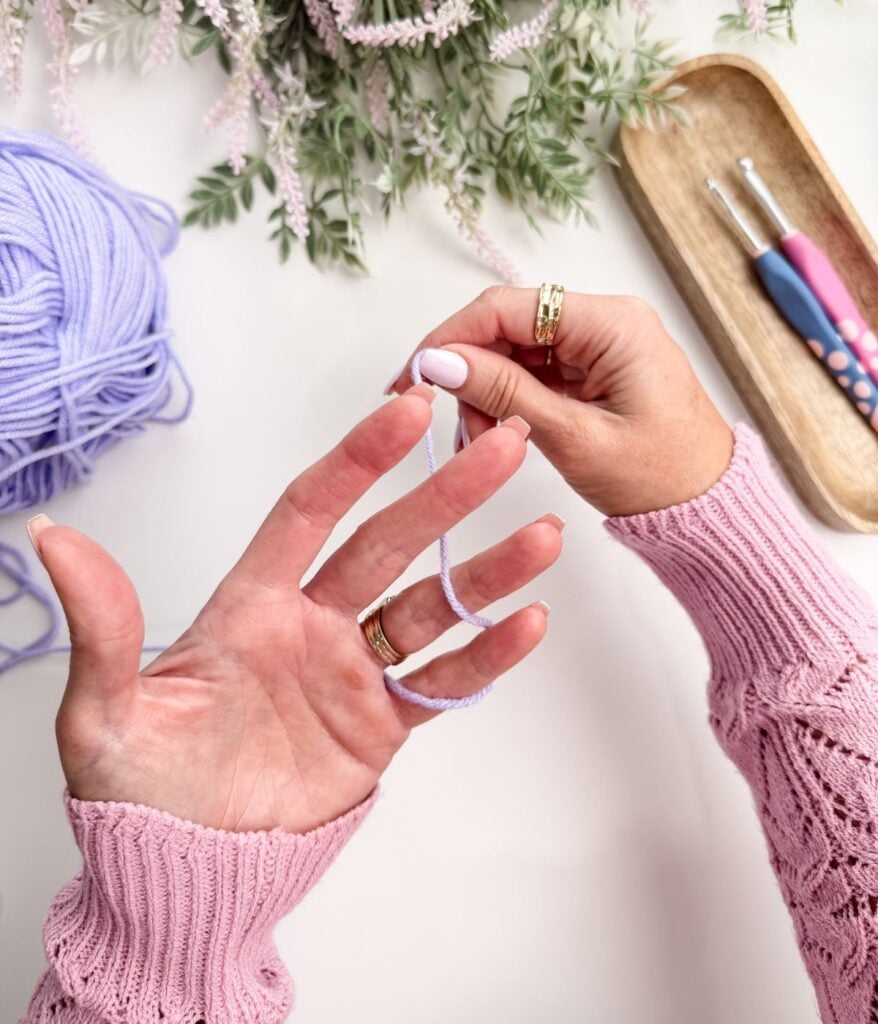
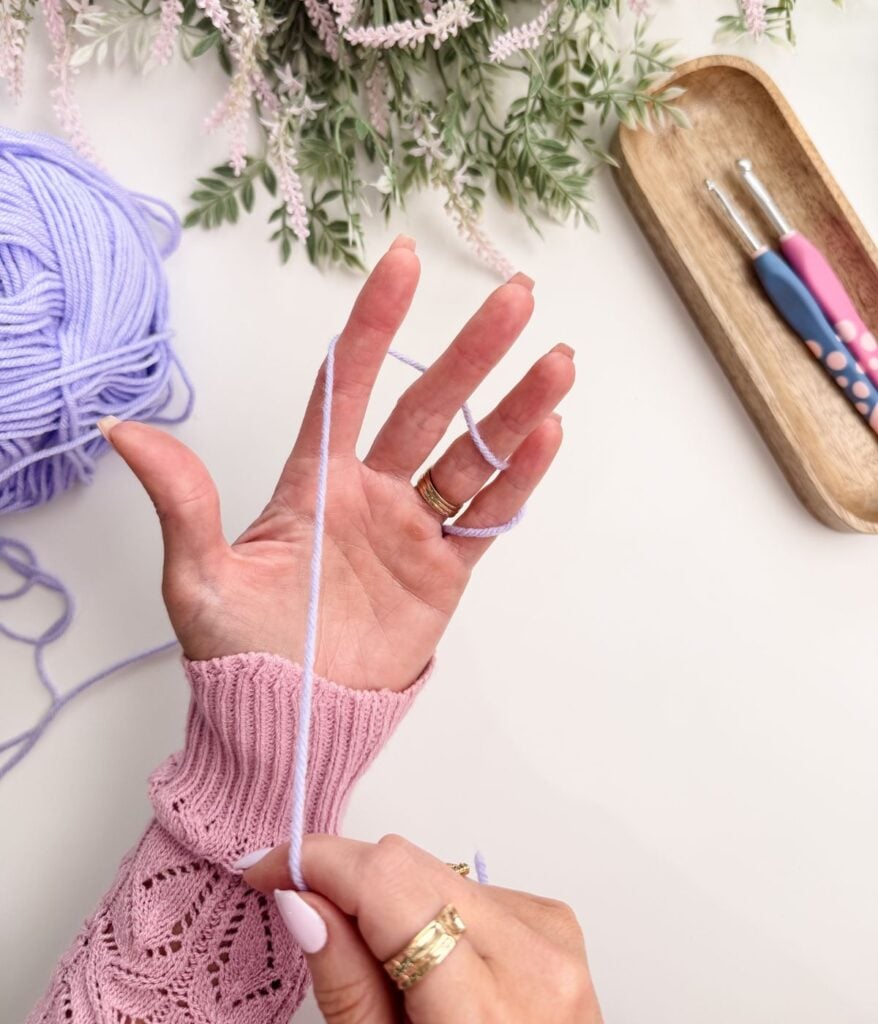
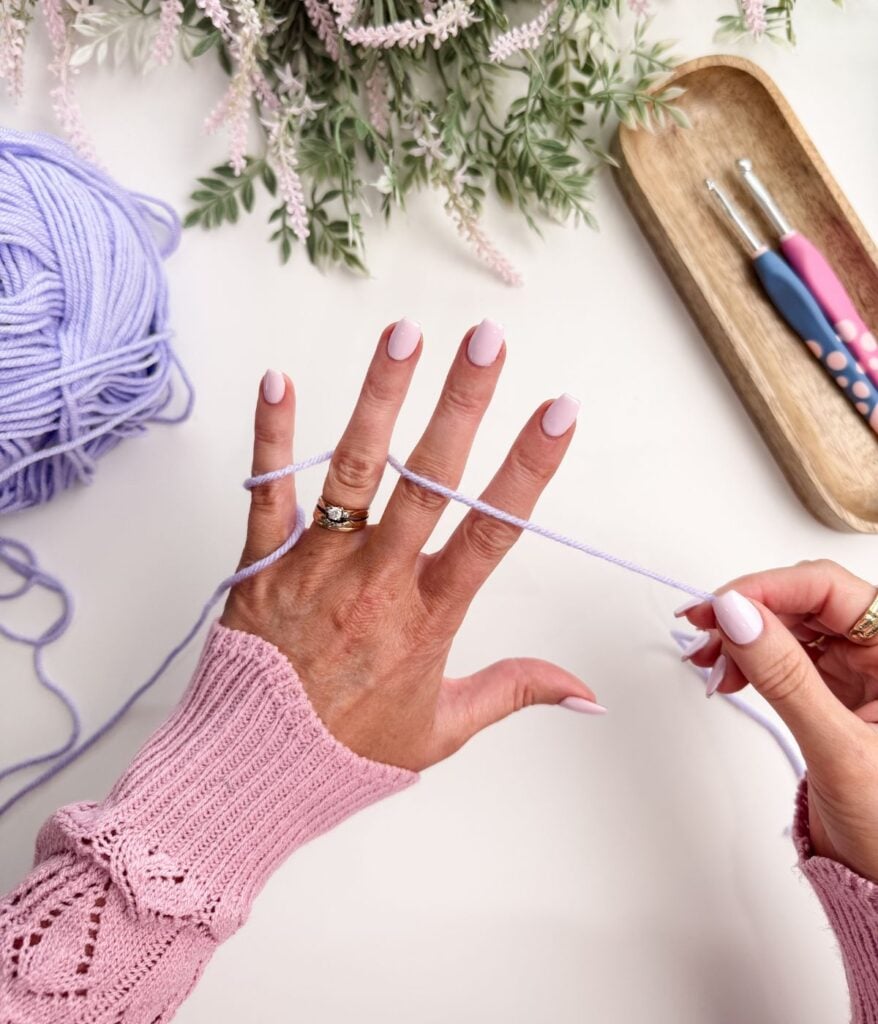
How to Thread the Yarn
- Start by turning your hand palm up
- Bring the yarn up through the space between your pinky finger and ring finger
- Wrap the yarn down and around the outside of your pinky
- Bring the yarn back up through the space between your pinky and ring finger
- Wrap the yarn down over your ring finger, passing it through the space between your ring finger and middle finger
- Bring the yarn up and over the top of your middle finger
- Continue bringing the yarn over your index finger
At this point, the yarn should be threaded smoothly through your fingers, with light tension created naturally by the wraps around your pinky and ring finger.
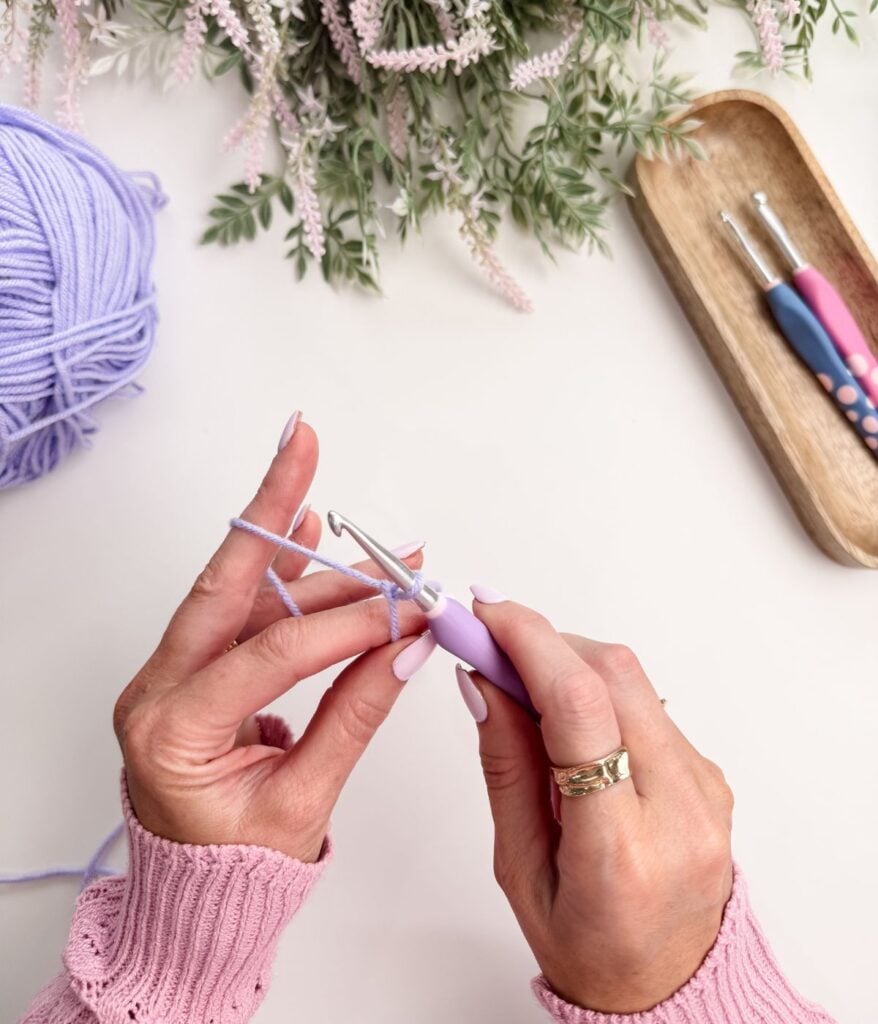
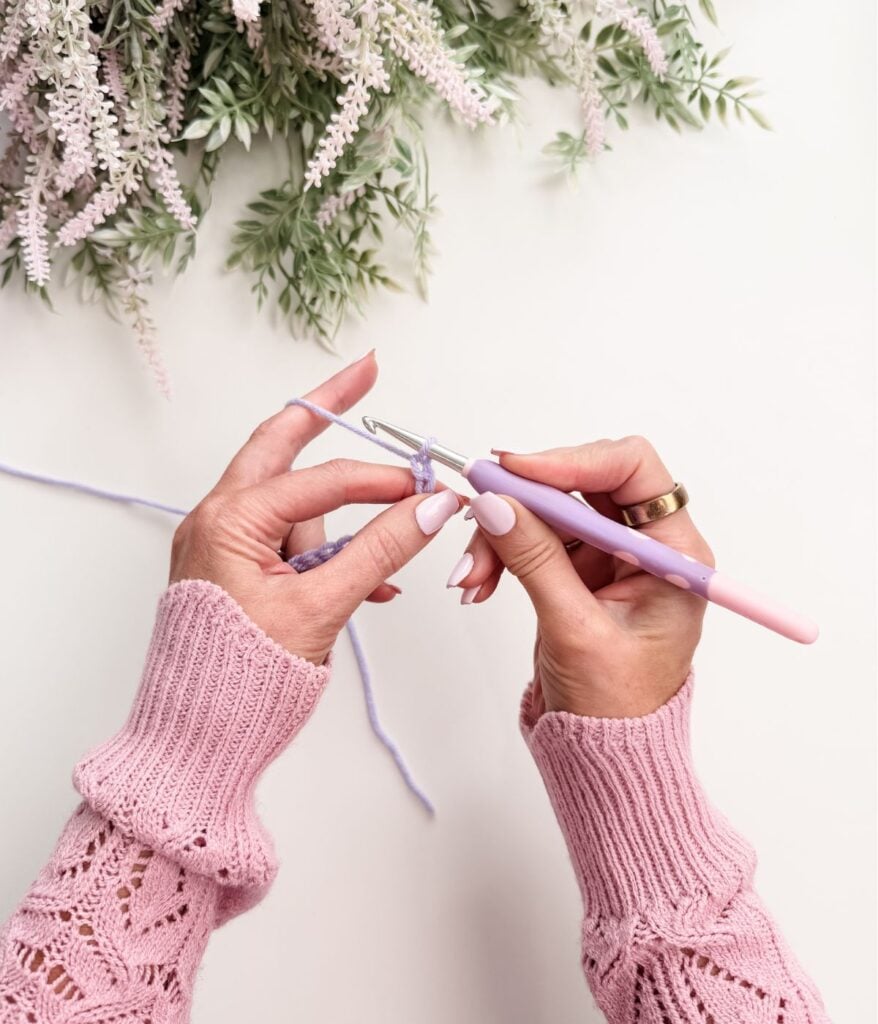
Holding the Yarn While Crocheting
With a slipknot already on your hook:
- Hold the working yarn lightly between your thumb and index finger
- Lift your middle finger slightly to create gentle tautness between the hook and your middle finger
- Use the strand of yarn running over your middle finger to pull through the loops on your hook
This setup allows the yarn to flow smoothly while still maintaining control. The tension adjusts naturally as you move your fingers, helping keep your stitches even as you work.
Through Two Fingers Hold
This method offers slightly more tension control.
How it works:
- The yarn passes over the index finger
- It goes under the middle and ring fingers
- It feeds back to the hook
This can be helpful if your stitches tend to be too loose.
Relaxed or Casual Hold
Some crocheters prefer a more relaxed yarn hold, especially if they crochet tightly.
How it works:
- The yarn is lightly draped over a finger
- There is less resistance
- The yarn flows more freely
This can help loosen tight stitches and reduce hand fatigue.
How to Find the Right Yarn Hold for You
The best way to find your yarn hold is through experimentation.
Try this:
- Test each yarn hold method
- Crochet a few stitches with each
- Notice how the yarn flows
- Choose the method that feels most comfortable
There is no “right” or “wrong” choice. The correct yarn hold is the one that allows you to crochet comfortably and consistently.
Common Beginner Concerns
Many beginners say:
- Their yarn feels hard to control
- Their stitches look uneven
- Their hands feel awkward or tense
This is all part of building muscle memory. Yarn holding feels unnatural at first because your hands are learning a new movement pattern.
The key is patience and practice.
Tips for Improving Yarn Control
If you’re struggling with yarn control:
- Slow down your movements
- Avoid gripping the yarn tightly
- Keep your hand relaxed
- Adjust your hold slightly if needed
Even small changes can make a noticeable difference.
Why Yarn Holding Affects Everything Else
Yarn holding impacts:
- Stitch consistency
- Counting stitches
- Turning your work
- Reading stitch anatomy
- Overall project appearance
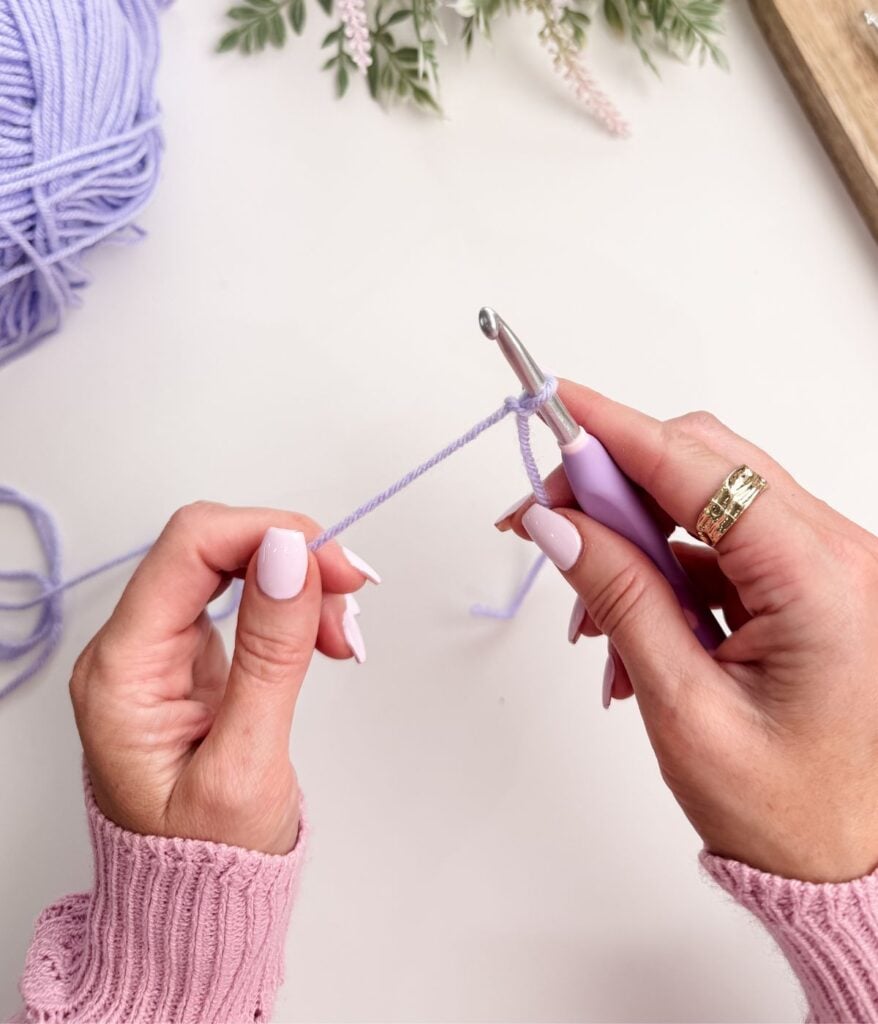
Once you find a comfortable yarn hold, crochet starts to feel smoother and more intuitive.
Learn to Crochet with MJ Beginner Basics
In this video you will learn:
- The basic crochet tools and notions you need
- How to hold your crochet hook correctly
- How to hold and control your yarn comfortably
- How to make your starting chain
What’s Next
Now that you understand how to hold your yarn and why it matters, the next step is learning about tension and how it improves naturally with practice.
Helpful Resources
- Join our Facebook Crochet Community for pattern support and inspiration
- Subscribe on YouTube for hundreds of free tutorials
- Sign up for our newsletter and receive 40% off your first Ravelry purchase!
- Sign up for our YouTube Membership
This lesson is part of the Learn to Crochet course by Michelle Moore of MJ’s Off The Hook Designs Inc, based in Lakefield, Ontario, Canada.
Thank you for learning with me at MJ’s Off The Hook Designs. I hope this lesson encourages you to keep practising and enjoying the process of crochet.
You’ve got questions, we’ve got a community!
Crocheting is better with friends! Join our group to post pictures and ask all your pattern support questions.