*This post may contain affiliate links to support the cost of this blog. At no cost to you, I may make a small commission if you purchase through these links. Read our Privacy Policy HERE
One of the most common issues we see when making crochet garments is frustration around fit, especially when everything seems to be done “right.” Gauge is correct, stitch counts match, and measurements match the pattern, yet the finished garment still feels more oversized or different than expected.
This is a very common experience in crochet garment making and almost always comes down to how body measurements, ease, fabric behaviour, and garment construction work together.
Patterns cannot account for every body type, proportion, or fit preference. Instead, they are designed to give you the information you need to make informed choices before you start, so you can adjust fit expectations or customize when needed.
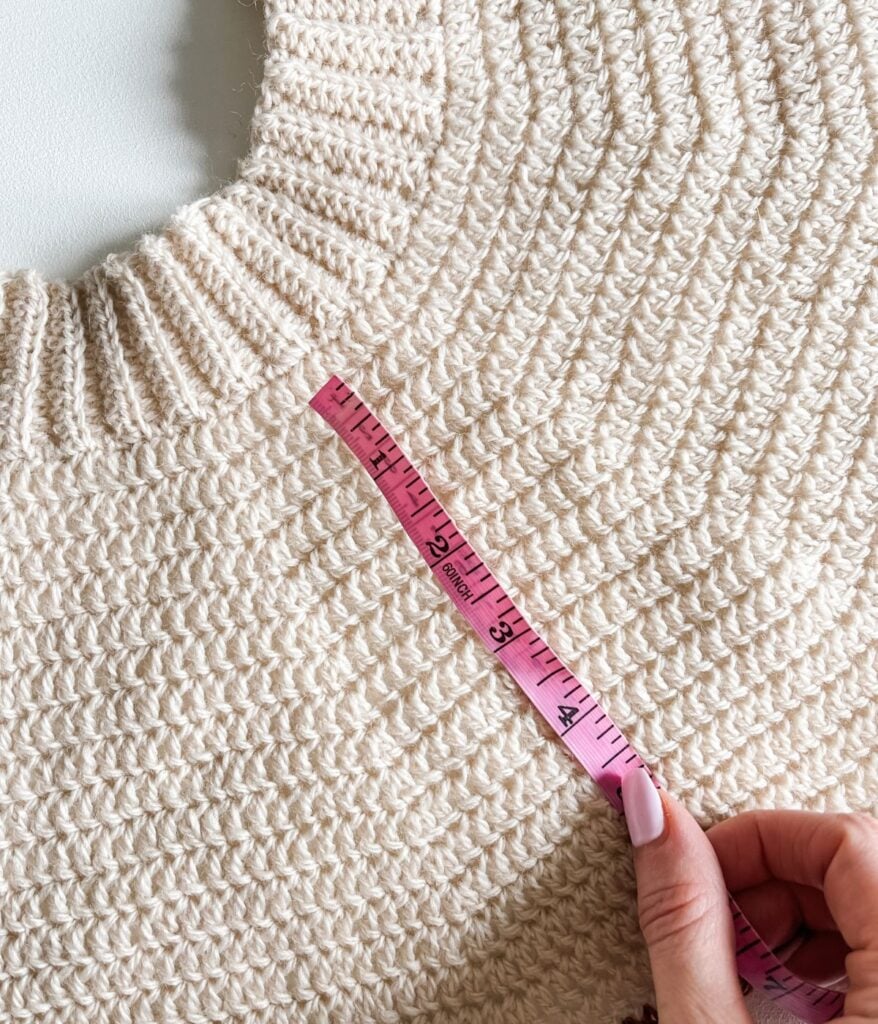
Taking accurate body measurements and understanding how they relate to finished garment measurements allows you to:
- Choose the correct size with confidence
- Understand how much ease a garment will have and where it will show up
- Anticipate how a straight or unshaped design will sit on your body
- Decide whether small adjustments or alterations may be helpful before you begin
Once you understand these pieces, garment sizing becomes far less confusing and much more predictable.
This post walks you through how to measure your body correctly for crochet garments, why those measurements matter, and how they are used alongside gauge and schematics to predict fit.
This post works together with:
- Choosing the Right Size, Ease, and Fit for Crochet Garments
- Why Gauge Matters (and How to Measure It Correctly)
I recommend reading all three before starting your first garment.
“To fit bust” vs “finished bust”; Understanding the size chart
One of the most common points of confusion when reading a size chart is the difference between “to fit bust” and “finished bust.” Understanding this distinction makes everything else about sizing and fit much clearer.
To fit bust refers to your body measurement.
This is the measurement taken around the fullest part of your chest and is used as a guideline to help identify a starting size range.
Finished bust refers to the measurement of the completed garment, not your body.
This number includes any ease built into the design and shows how large the sweater will be once finished.
These two numbers are not meant to be the same.
For example:
- If your bust measures 36 inches (to fit bust)
- And the finished bust is 39 inches
- That garment has 3 inches of positive ease, around the bust.
This is intentional in most sweater designs and does not mean the pattern runs large.
Some designs intentionally include negative ease, meaning the finished garment is smaller than the body measurement, so it stretches to fit.
Ease is not always evenly distributed throughout a garment. Depending on construction, ease may show up more through the body, under the arms, at the shoulders, or in the sleeves. This is why two garments with the same finished bust measurement can feel very different when worn.
When choosing a size, it’s important to:
- Know your to fit bust (your body measurement)
- Compare it to the finished bust (the garment measurement)
- Decide how much ease you want based on the style of the design
Once this difference is clear, the rest of the size chart and schematic become much easier to understand.

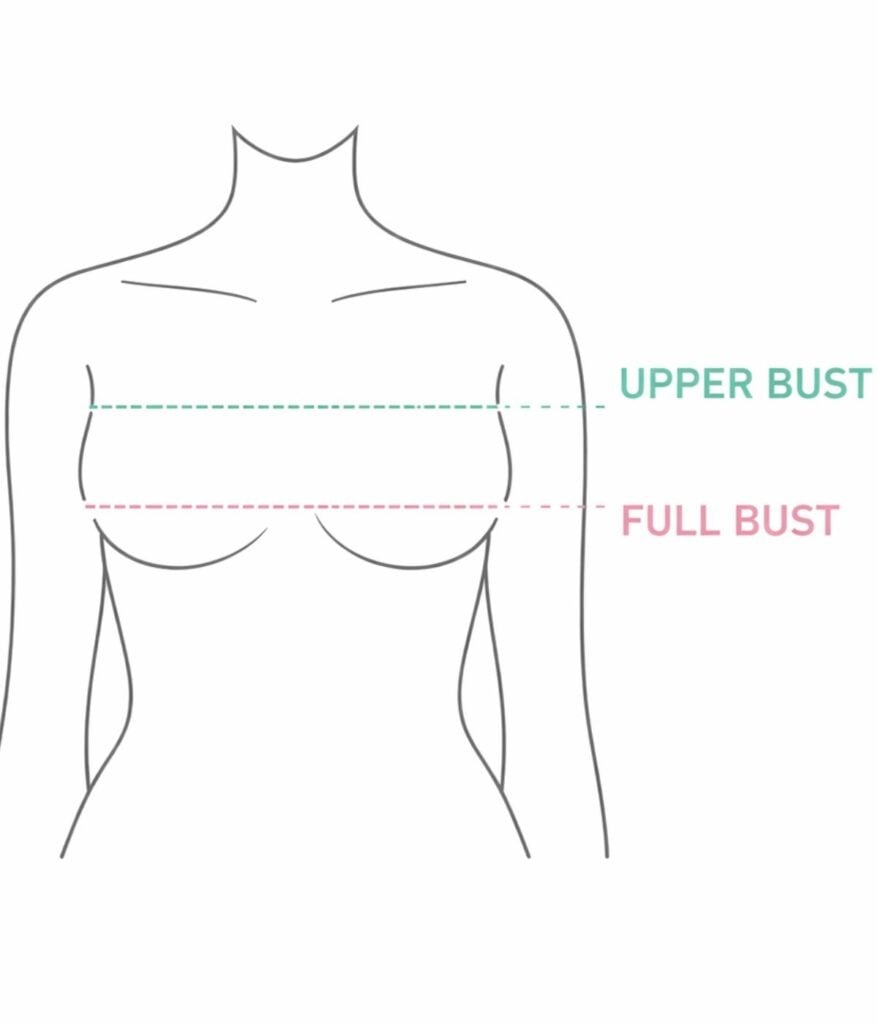
The Starting Measurement: Upper Bust vs Full Bust
Most size charts are organized by full bust measurement. That’s helpful, but it doesn’t always tell the whole story when it comes to fit.
When choosing a size for a crochet garment, especially sweaters, I recommend also checking your upper bust measurement.
Your upper bust is measured above the fullest part of your bust, under your arms, with the tape snug and level.
Why does this matter?
Because your shoulders, neckline, and armhole depth are based on your frame, not the fullest part of your chest.
If you size only from full bust, you may notice:
The shoulders feel too wide
The armholes sit too low
There’s extra fabric across the upper chest
The garment feels oversized in areas you didn’t expect
Starting with your upper bust helps the garment sit correctly through the shoulders and underarms. Then you can look at the finished bust measurement and decide whether the amount of ease through the body matches the look you want.
Both measurements matter. They simply serve different purposes.
How to Measure Your Full Bust
Wear the bra you would normally wear with the garment.
Stand naturally with your arms relaxed.
Wrap the tape measure around the fullest part of your bust.
Keep the tape level and parallel to the floor.
The tape should be snug but not tight.
This number helps you understand how much room the finished garment will have through the body once ease is added.
Plus Size and Fuller Bust Considerations (Top Down Garments)
In top-down designs, the yoke controls shoulder width and armhole depth.
If you choose a size based only on full bust, the yoke can sometimes end up deeper or wider than intended.
Checking your upper bust measurement first helps maintain the correct proportions through the shoulders and underarms. From there, you can evaluate how the garment will fit through the bust and decide whether shaping adjustments would improve the overall fit.
Fit is about proportion and construction, not just a single number on a size chart.
Additional measurements that strongly affect fit
While bust measurement determines sizing, other measurements determine how the garment looks and feels on your body.
Waist or torso measurement
- Measure around the natural waist (the smaller circumference of your torso)
- Many people’s waist is significantly smaller than their bust
- In straight or unshaped garments, this difference creates visible ease
Hip measurement
- Measure around the widest part of the lower hip
- Essential for longer sweaters, tunics, dresses, and cardigans
Upper arm or bicep measurement
- Measure around the widest part of the upper arm, near the underarm
- Important for sleeve comfort and mobility
Arm length
- Measure from the underarm straight down to the wrist
- Keep the arm relaxed and slightly bent
- This measurement is used to determine sleeve length in standard sizing
Back length
- Measure from the most prominent bone at the base of the neck down to the natural waistline
- Helpful for adjusting garment length
- These measurements allow you to anticipate fit and decide whether adjustments may be helpful before you begin.
- ‘
Visit the Yarn Craft Council for Measuring Standards.
Common measuring mistakes
Some of the most common errors include:
- Guessing measurements instead of using a tape measure
- Measuring over bulky clothing
- Pulling the tape too tight
- Using clothing size instead of body measurements
- Assuming bust measurement and torso proportions are the same
Accurate measurements should always be taken directly on the body.
Knowing your body proportions
Body measurements don’t exist in isolation. How a garment fits is influenced by the relationship between your measurements, not just the numbers themselves.
Consider the following when reviewing your measurements:
- A larger difference between bust and waist will create more visible ease in straight or unshaped garments
- Broader shoulders or a fuller upper chest can affect yoke fit and armhole depth in top-down designs
- Fuller hips may impact fit and length in longer garments
- Upper arm measurement can influence sleeve comfort more than bust size alone
Understanding your proportions helps you anticipate where ease will show up and whether small adjustments may improve fit. This is especially helpful when working with relaxed or oversized designs.
Why measuring before gauge still matters
The gauge tells you whether your fabric matches the pattern math. Measurements tell you whether that fabric will fit your body.
Gauge and measurements work together. One does not replace the other.
For a deeper dive on gauge and why it matters, see our full guide to gauge.
Fabric behaviour and stitch pattern impact
Stitch pattern plays a significant role in how a garment fits. Dense fabrics tend to hold structure and feel firmer, while open or textured stitch patterns can stretch, drape, or relax with wear. This means two garments with identical measurements may fit differently depending on the stitch pattern used.
Final thoughts on measuring
Understanding your measurements gives you control, helps you predict fit, and makes it easier to choose the right size or make adjustments with confidence.
Next, learn how to use those measurements to choose a size, understand ease, and predict fit in crochet garments.
Helpful Resources
- Join our Facebook Crochet Community for pattern support and inspiration
- Subscribe on YouTube for hundreds of free tutorials
- Sign up for our newsletter and receive 40% off your first Ravelry purchase!
- Sign up for our YouTube Membership
This post is written by Michelle Moore of MJ’s Off The Hook Designs Inc, based in Lakefield, Ontario, Canada. Your go-to source for modern, easy crochet patterns. Published on January 15th, 2026.
Thank you for visiting MJ’s Off The Hook Designs. You can find more crochet patterns in our Ravelry and Etsy shops.
For daily inspiration and behind-the-scenes peeks, join me over on Facebook or Instagram, or join our YouTube Membership for exclusive content!
You’ve got questions, we’ve got a community!
Crocheting is better with friends! Join our group to post pictures and ask all your pattern support questions.