*This post may contain affiliate links to support the cost of this blog. At no cost to you, I may make a small commission if you purchase through these links. Read our Privacy Policy HERE


Introducing the Winter Wonder Cable Sweater crochet pattern!
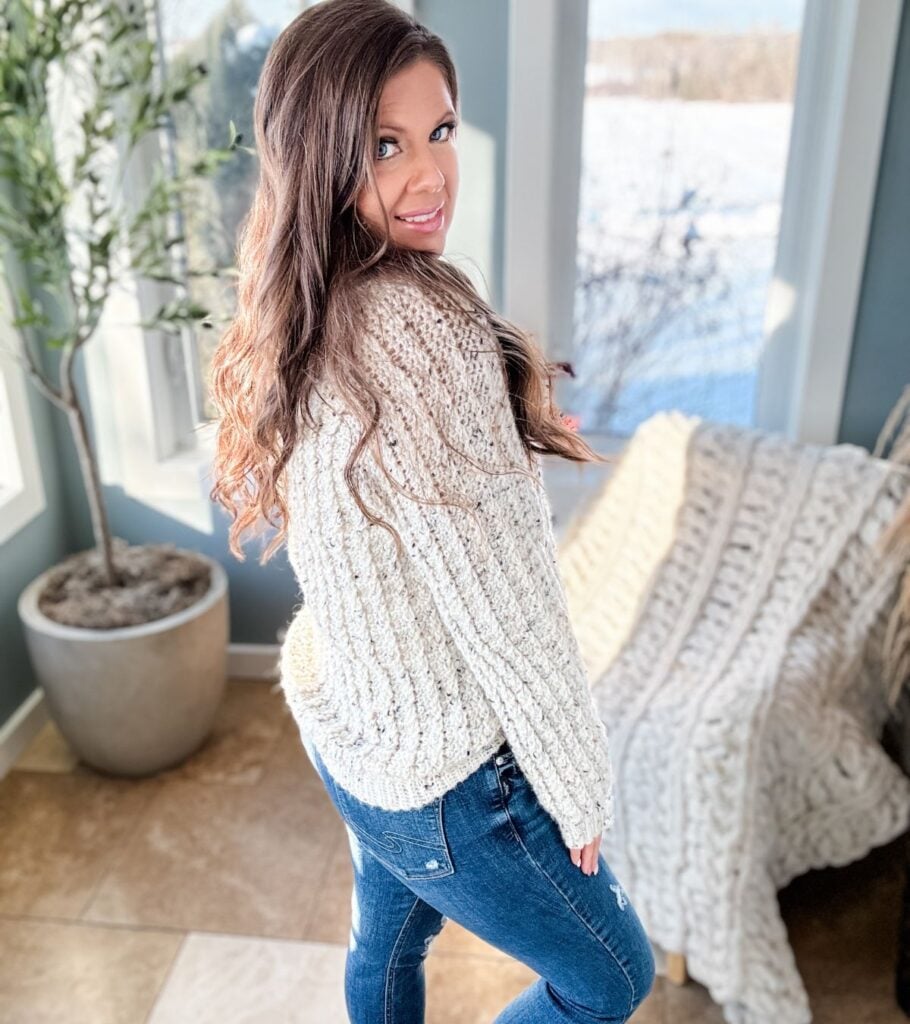
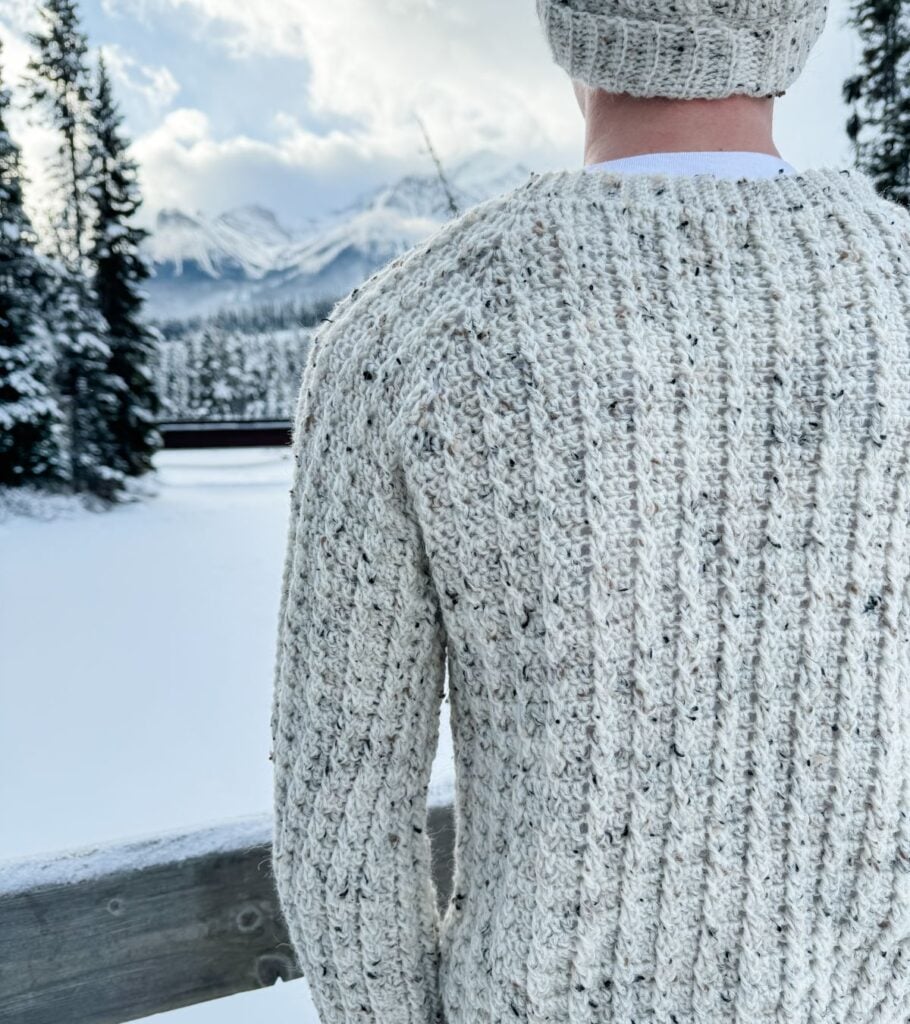
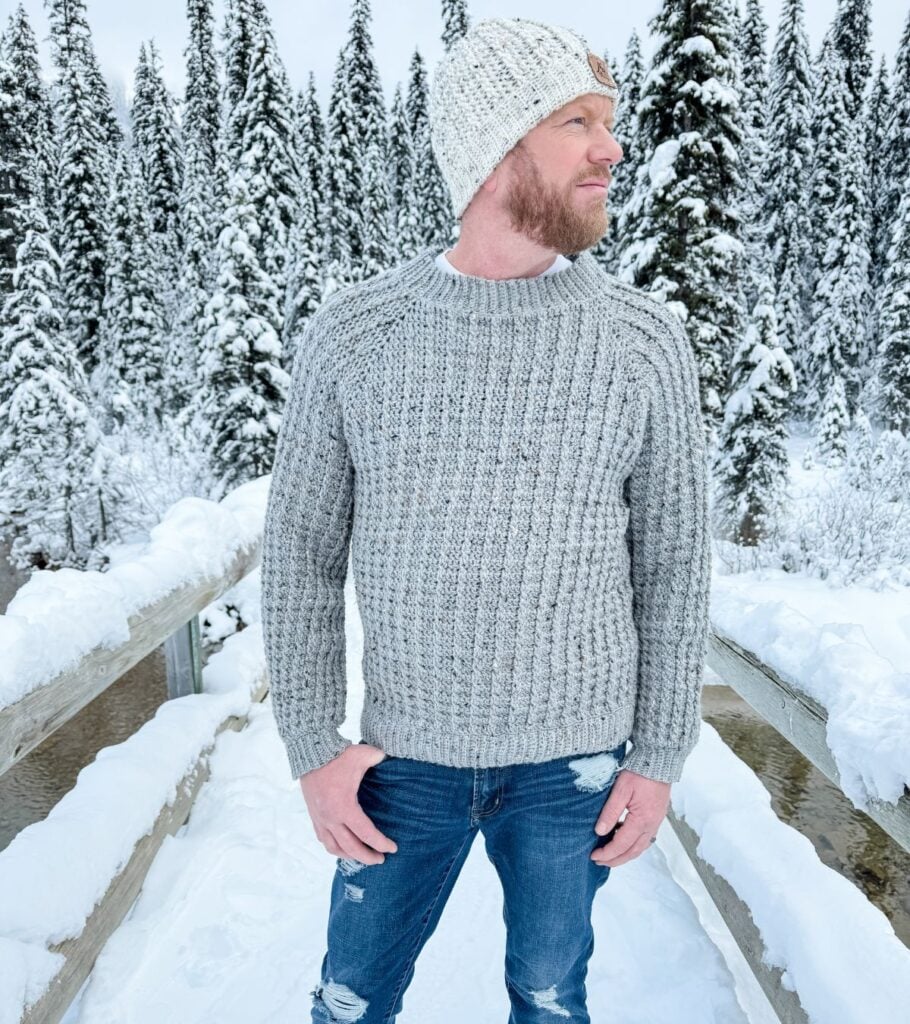
This cozy top-down raglan style pullover showcases a two-stitch cable design, separated with double crochet stitches to create a beautifully textured finish.
One of the standout features of this pattern is its inclusive sizing, catering to men’s sizes ranging from XS to 5X, while effortlessly transcending gender boundaries to offer a universally flattering fit for both men and women.
The pattern comes complete with a detailed and user-friendly step-by-step video tutorial available on YouTube.
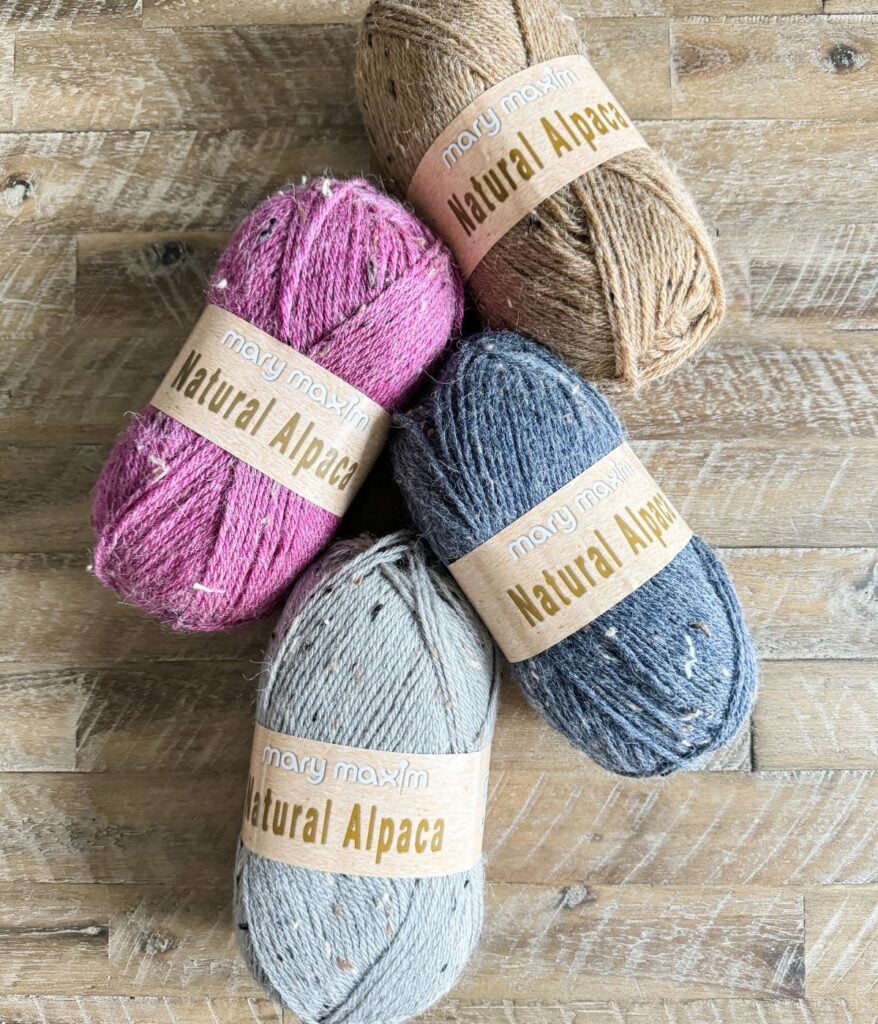
The Winter Wonder Cable Sweater is crocheted using Natural Alpaca Tweed yarn from Mary Maxim. This yarn not only promises warmth and comfort but also showcases the inherent beauty of the alpaca fibre, adding a touch of luxury to the finished garment.
Below, you will find everything you need to make this Men’s Pullover, including the yarn, hook, materials, free written pattern for blog subscribers, pictures and a video tutorial. If you love this free crochet pattern, please share!

Key Takeaways
- The Men’s Pullover crochet pattern features a stylish cable design and offers inclusive sizing from XS to 5X, perfect for everyone.
- This pattern includes a user-friendly video tutorial on YouTube to guide you through the crochet process.
- Crafted using Natural Alpaca Tweed yarn, this cozy sweater adds a luxurious touch to your wardrobe.
- The pattern simplifies the cable crochet technique, making it accessible for intermediate skill levels.
- Enjoy the creativity of crocheting a timeless, warm piece that looks great on both men and women.
Project Overview
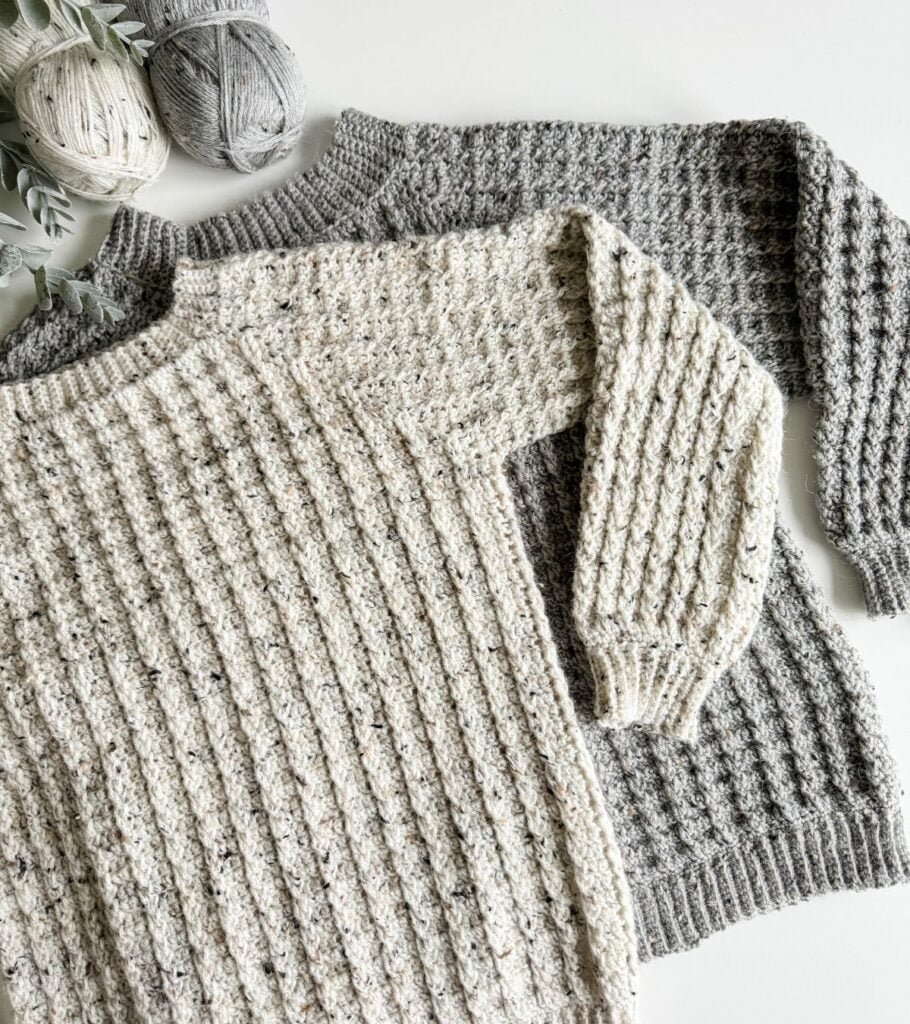
The Winter Wonder Cable Pullover is a cozy top down raglan sweater featuring a textured two stitch cable pattern separated by double crochet stitches. Crocheted in Natural Alpaca Tweed from Mary Maxim, this warm and stylish design includes sizes XS to 5X and offers a comfortable fit for both men and women. A step by step video tutorial is available on YouTube to guide you through the pattern.
Skill level: Intermediate
Sizes: XS-5XL
Yarn Weight: Worsted Weight #4
Yarn: Natural Alpaca Tweed CDN
Hook Sizes: US G/6 (4mm), US G+/7 (4.5mm)
Construction: Worked from top down, In the round
Video Tutorial: https://youtu.be/WIA23pu_iGM
Men’s Pullover
It’s finally here – the moment you’ve been eagerly waiting for. This stunning crochet sweater is truly a labour of love, the perfect project to pour your creativity into. Picture this: a cozy, stylish garment that’s not only designed for the special man in your life but one that will look equally stunning on you, ladies. And let’s be real, who wouldn’t want to rock this fabulous cable sweater? This is the kind of piece that brings people together – a joy to create and a joy to wear. So, get ready to dive into this crochet adventure and create something truly extraordinary for your loved ones (and yes, yourself included). Because when it comes to timeless style and comfort, this sweater is an absolute game-changer.
The Great Rocky Mountains
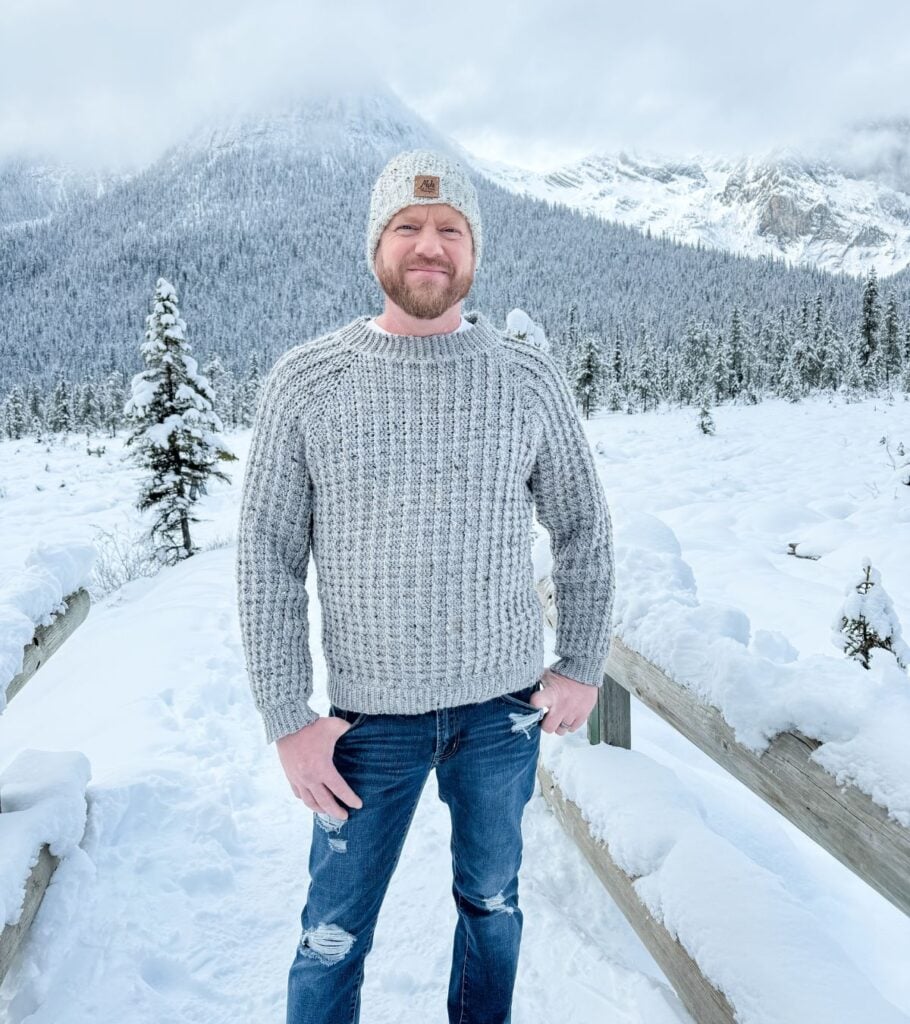
Many of you know my deep affection for Alberta’s majestic Rocky Mountains. The idea for this sweater first came to me during my recent trip out west, coinciding with my daughter’s bold decision to move out for the first time and move to the mountains. After much anticipation, I was overjoyed to have not just one, but two of these cozy sweaters completed just in time for our Christmas trip back. I’m absolutely thrilled to share that I’ve had the opportunity to model and capture these garments against the stunning backdrop of the mountains. It’s a true delight to blend the warmth and beauty of these handmade pieces with the natural splendour of the Rockies.
Is Cable Crochet Hard?
In crochet, cable patterns are typically seen as more advanced. But with this men’s pullover pattern, the approach is simpler and quite easy to follow. By using front post double crochets, crocheters can make a cool design without the usual complicated steps. That’s why this men’s pullover pattern is a great way to dive into the world of cable designs, especially for those interested in trying out a typical cable design. This pattern is perfect for those moving from advanced beginner to intermediate level crochet.
Best Yarn for a Crochet Sweater
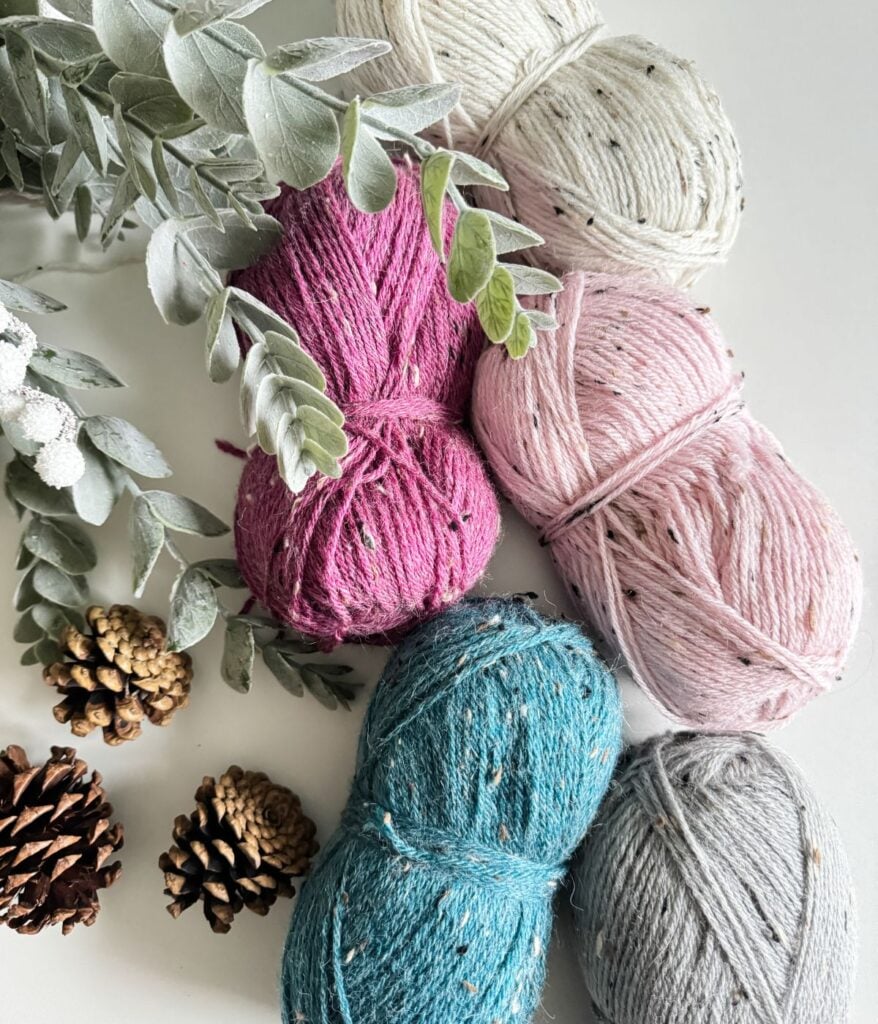
When it comes to choosing the best yarn for making a crochet pullover sweater, the Mary Maxim Natural Alpaca Tweed yarn stands out as an excellent option. With a composition of 77% acrylic, 20% alpaca, and 3% viscose, this worsted-weight yarn offers a perfect blend of warmth, softness, and durability. Whether you’re creating hats, mittens, sweaters or cozy socks, this yarn proves to be versatile and reliable.
Video Tutorial

Yarn Requirements
Worsted Weight #4 77% acrylic, 20% alpaca, 3% viscose 262 yds/100g
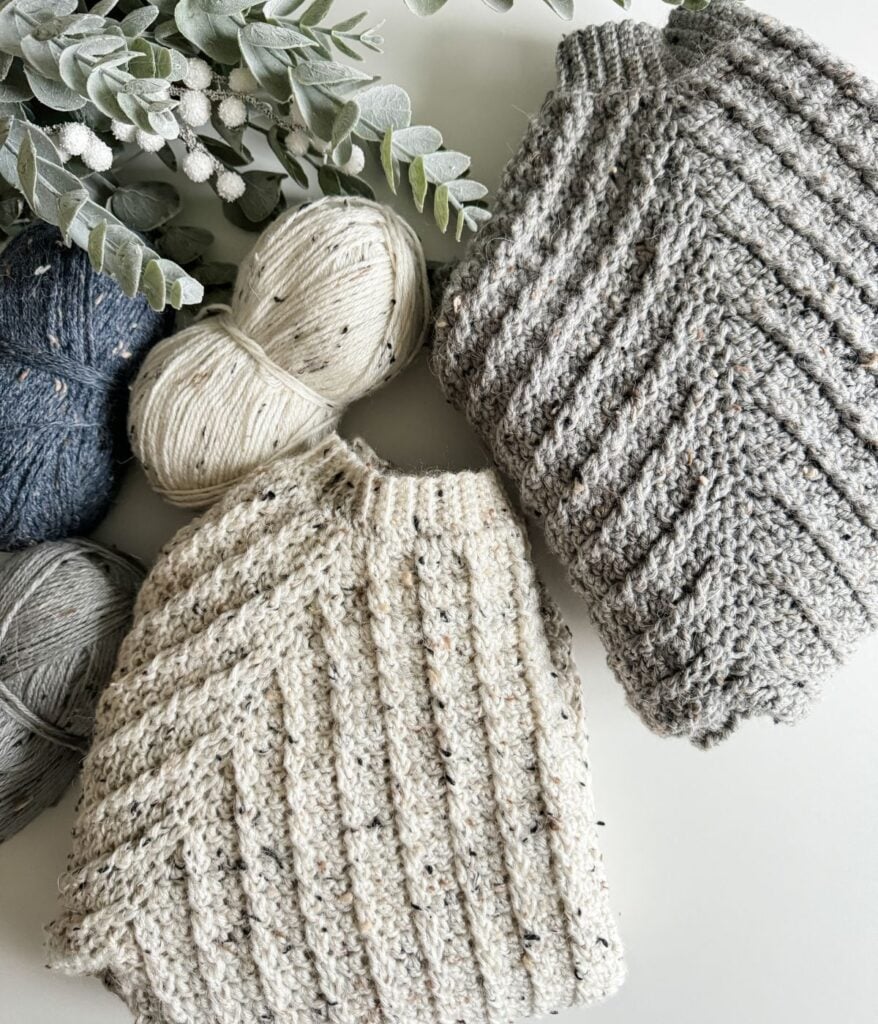
Shown in Raw Cotton and Grey
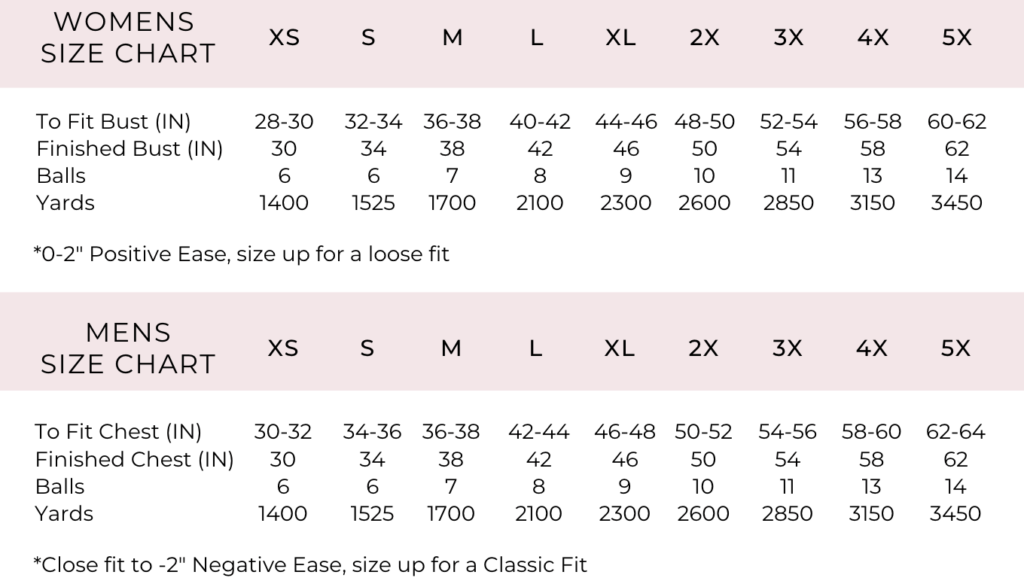
XS (S, M, L, XL, 2X, 3X, 4X, 5X)
6 (6, 7, 8, 9, 10, 11, 13, 14) Balls
Sizes
XS (S, M, L, XL, 2X, 3X, 4X, 5X)
Size Chart
Skill Level
Intermediate
Substituting Yarn
Yarn substitution is a valuable skill for crocheters, especially when the original yarn listed in a pattern is unavailable. The same goes for the Winter Wonder Cable Pullover pattern.
To achieve the perfect fit for the recommended sweater sizes, it’s crucial to maintain the same size. If necessary, adjusting your crochet hook size can help you achieve the correct measurements. It’s worth noting that Natural Alpaca worsted yarn is slightly thinner than most worsted-weight yarns, so keep that in mind if you’re having difficulty matching gauge with a different brand.
Selecting a yarn with a similar weight to the one specified in the pattern is recommended when substituting yarn. Starting with a yarn of similar weight will give you a solid foundation.
Also, creating a gauge swatch before starting your project is highly recommended. This will help ensure that your tension and stitch count align with the pattern’s specifications.
Yarn Substitutes
Brava Worsted or Brava Tweed 218yds/100g
Swish Worsted – 110 yds/50g
Wool of the Andes Worsted or Tweed 110yds/50g
Lion Brand Color Theory 246yds/100g

Crochet Hooks Needed
Additional Supplies for the Crochet Sweater
Helpful Resources
- Join our Facebook Crochet Community for pattern support and inspiration
- Subscribe on YouTube for hundreds of free tutorials
- Sign up for our newsletter and receive 40% off your first Ravelry purchase!
- Sign up for our YouTube Membership
Construction
The Raglan pullover is seamlessly worked in one piece, starting from the top down and working in the round. Once you complete the yoke, continue working the body in the round. Join at the underarm and work each sleeve in the round, finally completing the cuffs with a join-as-you-go technique. For the Medium size, we have a step-by-step video tutorial available on our YouTube channel.

Gauge
Body: 16 sts and 11 rows equal to 4″ in dc/fpdc pattern with 4.5mm hook
Ribbing: 10 sts and 10 rows equal to 2″ in sc blo pattern with 4mm hook
Abbreviations
Blo – Back Loop Only
Ch – Chain
Dc – Double Crochet
Dc2tog – Double Crochet Decrease
Fpdc – Front Post Double Crochet
Rep – Repeat
Sc – Single Crochet
Sk(d) – Skip(ped)
Sl St – Slip Stitch
Sp(s) – Space(s)
St(s) – Stitch(es)
V-St – dc, ch 1, dc in the same st
( ) – Work step in parentheses in indicated stitch
Upgrade to the Premium PDF Pattern!
Digital PDF Download
Digital pattern only. No physical item will be shipped.
Winter Wonder Cable Pullover
FAQ & Terms
This post may contain affiliate links. Purchases made through these links may earn MJ’s Off The Hook Designs Inc. a small commission at no extra cost to you. Content on this site is supported by ads—please do not block or remove them.
Copyright
All patterns, photos, and written content are the property of MJ’s Off The Hook Designs Inc. and protected by copyright law.
Usage
Free patterns are for viewing only on this blog. You may not copy, download, print, screenshot, or redistribute any part of the pattern. Access must remain through this page with ads visible. Use of ad blockers, reader view, or any similar tools that remove or hide ads and site content is strictly prohibited.
Legal Notice
Unauthorized reproduction or distribution may result in copyright infringement penalties.
By accessing this post, you agree to these terms and conditions.
Yes! You may sell finished items made from MJ’s patterns, but please credit:
“Pattern by MJ’s Off The Hook Designs Inc.”
Pattern Support is only available in our Facebook Community group and Video Tutorials.
No additional support is provided for modified patterns, alternate yarns, or changes to gauge.
Having trouble unlocking the pattern?
If you’re seeing the message “Email subscription failed, please try again”, don’t worry — it’s usually an easy fix! Here are a few quick things to try:
First, double-check your login details. Make sure you’re signing in with the same email you originally used to create your Grow account. If you’re not sure, click “Forgot Password” to reset your login. Once you’ve updated it, return to my site and try again.
Next, clear your browser’s cache and cookies. Sometimes the login just gets stuck. You can also try opening the page in a private or incognito window, or switching to another browser like Chrome, Safari, or Firefox to see if that does the trick.
It also helps to make sure you’re logged into Grow directly. Visit https://grow.me and sign in there first. Once you’re logged in, come back to my site and refresh the page — your pattern should unlock automatically.
If you’re still having trouble, check your browser’s privacy settings. Grow needs cookies to verify your account, so make sure cookies and cross-site tracking are allowed. On iPhone, go to Settings → Safari → Privacy & Security, then turn off “Prevent Cross-Site Tracking” and “Block All Cookies.” On Android or Chrome, go to Settings → Site Settings → Cookies and select “Allow all cookies.”
Lastly, ad blockers or browser extensions can sometimes block the login pop-up. Try turning them off temporarily while you sign in. If nothing seems to work, log out of Grow completely by going to https://grow.me, selecting your profile icon, and choosing Log Out. Then come back to my site and try logging in again.
If you’re still stuck after trying all of this, please reach out through my Contact Page and let me know what device and browser you’re using (and include a screenshot if you can).
To unlock Exclusive Content on my Blog, all you need to do is click the box below and the Grow.me app will pop up, allowing you to enter your email and create a password. Once you’ve created an account, every time you see Exclusive Content on my blog, simply login to your Grow account. Be sure to switch to the login screen to enter your login credentials.
If you forget your password, click the “forgot password” link and follow the prompts. Please note that I’m unable to assist with resetting Grow passwords or accessing your Grow account, so be sure to save your login information in a safe place.
To make things even easier, I’ve created a video for both desktop and mobile users that offer additional assistance. You can access this video by visiting my FAQs page HERE or by watching the video below.
Thank you for subscribing and for joining me on my crochet journey. I hope you enjoy the exclusive content available to our subscribers and create beautiful crochet projects using the resources you discover.
Pattern
XS (S, M, L, XL, 2X, 3X, 4X, 5X)
Notes
The pullover is worked from the top down in the round. The collar is completed first by working in rows. It is then slip-stitched together, and the pullover begins by working around the collar’s edge.
All sizes have the same size collar and neck opening. Work pullover in rounds until the required size is reached. The pattern is written for the smallest size, with the larger sizes in parentheses ( ). If there is only 1 number, it applies to all sizes—a step-by-step video tutorial is provided on YouTube.
Collar
Notes
You can alter the width of the collar by chaining out more or fewer chains. The Raw Cotton sweater is shown with a total of 6 stitches and the Grey sweater a total of 10 stitches.
Row 1 (WS):
With the smaller hook, ch 11, 1 sc in 2nd ch from hook, 1 sc in each ch across, turn—10 sts.
Row 2 (RS):
Ch 1 (not included as a st here and throughout), 1 sc in blo of each st across, turn—10 sts.
Rows 3-100:
Rep Row 2. After the final Row, ch 1, fold collar RS facing and sl st together (work through the blo). Flip the collar so that the seam is to the inside. Change to larger hook.
Yoke
Setup Round:
With the larger hook, ch 1, work sc sts evenly around the collar (1 st/row), sl st in the first sc to join—100 sts.
Round 1:
(Ch 3, 1 dc in the first st) (beg V-st made), 1 dc in each of next 16 sts (right sleeve), V-st in next st, 1 dc in each of next 32 sts (front), V- st in next st, 1 dc in each of next 16 sts (left sleeve), V-st in next st, 1 dc in each of next 32 sts (back), sl st in the V-st to join—104 dc.
Increase pattern begins – Continue increasing the yoke for the size you are working.
Project Tips
When slip stitching to join, keep the slip stitch loose; the last dc of every round needs to be worked into the sl st to keep the st count on track.
Round 2:
(Ch 3, dc in ch-1 sp) (beg V-st made), * 1 dc in next 2 sts, [1 fpdc on next 2 sts, dc in next 2 sts] to next V-st, V-st in V-st; rep from * around, omitting last V-st, the last dc is worked into the sl st of the previous round here and throughout, sl st in the V-st to join—112 sts
Round 3:
(Ch 3, dc in ch-1 sp) (beg V-st made), * dc in next 3 sts, [sk next st, fpdc on next st, fpdc on skd st, dc in next 2 sts] to last 3 sts before V-st, 1 dc in each of last 3 sts, V-st in V-st; rep from * around, omitting last V-st, sl st in the V-st to join—120 sts.
Round 4:
(Ch 3, dc in ch-1 sp) (beg V-st made), * 1 fpdc on next 2 sts, [1 dc in next 2 sts, 1 fpdc on next 2 sts] to next V-st, V-st in V-st; rep from * around, omitting last V-st, the last fpdc is worked on ch-3 of previous round, sl st in the V-st to join—128 sts.
Round 5:
(Ch 3, dc in ch-1 sp) (beg V-st made), * dc in first st,[sk next st, fpdc on next st, fpdc on skd st, dc in next 2 sts] to last st before V-st, 1 dc in last st, V-st in V-st; rep from * around, omitting last V-st, sl st in the V-st to join—136 sts.
Rounds 6-12 (16, 20, 24, 28, 32, 36, 40, 44):
Rep Rounds 2-5, ending on Round 4—192 (224, 256, 288, 320, 352, 384, 416, 448) sts. Don’t fasten off. See chart on pg. 14.
Separate Body and Sleeves
Setup:
Ch 4 (pm in 2nd ch), sk over the right sleeve, join yarn in the next V-st, and fasten off. Put a slip knot on the hook, sk over front, join yarn in next V-St, ch 4, sk over left sleeve, join yarn in the next V-st, fasten off.
Body
Round 1:
Put a slip knot on the hook, join yarn in marked ch, ch 2 (not included as a st) dc in same ch, dc in next 2 chs, dc in first st, *[sk next st, fpdc on next st, fpdc on skd st, dc in next 2 sts] to last st before ch 4, dc next st, dc in next 4 chs, dc next st; rep from * around, end with dc in last st, dc in first ch, sl st in the first dc to join—120 (136, 152, 168, 184, 200, 216, 232, 248) sts.
Round 2:
Ch 1 (not included as a st here and throughout), *1 fpdc on next 2 sts, 1 dc in next 2 sts; rep from * around, sl st in the first fpdc to join—120 (136, 152, 168, 184, 200, 216, 232, 248) sts.
Round 3:
Ch 1, *sk first st, fpdc on next st, fpdc on skd st, 1 dc in next 2 sts; rep from * around, sl st in the first fpdc to join—120 (136, 152, 168, 184, 200, 216, 232, 248) sts.
Rounds 4-38:
Rep Rounds 2 & 3 ending on Round 2. You may alter the length to suit personal preference.
Round 39:
Ch 1, work 1 sc in each st around—120 (136, 152, 168, 184, 200, 216, 232, 248) sts.
Band
The band is joined as you go to the body edge.
Row 1:
With the smaller hook, ch 11, 1 sc in 2nd ch from hook and in each ch across, sk first st at body edge, sl st in next 2 sts (body edge), turn—10 sts.
Row 2:
Sk sl sts, 1 sc in blo of each st across, turn—10 sts.
Row 3:
Ch 1, work 1 sc in blo of each st across, sl st in next 2 sts (body edge), turn—10 sts.
Rows 4-120 (136, 152, 168, 184, 200, 216, 232, 248):
Rep Row 2 & 3 ending on Row 2. In the last Row, ch 1, with RS facing sl st band together, fasten off and weave in ends.
Sleeves
Put a slip knot on the hook, at the underarm join yarn in 2nd ch of ch 4.
Round 1:
Ch 1 (not included as a st here and throughout), sk first st, fpdc on next st, fpdc on skd st, 1 dc in next 2 sts; rep from * around, sl st in the first fpdc to join—44 (52, 60, 68, 76, 84, 92, 100, 108) sts. *At the underarms corner, you may need to weave the starting tail to close any gaps.
Round 2:
Ch 1 (not included as a st here and throughout), *1 fpdc on next 2 sts, 1 dc in next 2 sts; rep from * around, sl st in the first fpdc to join—44 (52, 60, 68, 76, 84, 92, 100, 108) sts.
Rounds 3-6:
Rep Rounds 1 and 2: *If a shorter sleeve is required for 4X or 5X you may want to start the decrease at Round 1 or 3.
Decrease
Work 1 decrease round followed by 2 non-decrease rounds.
Round 7 (dec):
Ch 1, sk first st, fpdc on next st, fpdc on skd st, 1 dc2tog over next 2 sts, *[sk next st, fpdc on next st, fpdc on skd st, 1 dc in next 2 sts]; rep from * around, to last 2 dc, 1 dc2tog across last 2 sts, sl st in the first fpdc to join—42 (50, 58, 66, 74, 82, 90, 98, 106) sts.
Round 8:
Ch 1, 1 fpdc on next 2 sts, 1 dc in next st, *[1 fpdc on next 2 sts, 1 dc in next 2 sts]; rep from * around to last dc, 1 dc in last st, sl st in the first fpdc to join—42 (50, 58, 66, 74, 82, 90, 98, 106) sts.
Round 9:
Ch 1, sk first st, fpdc on next st, fpdc on skd st, 1 dc in next st, *[sk next st, fpdc on next st, fpdc on skd st, 1 dc in next 2 sts]; rep from * around to last dc, 1 dc in last st, sl st in the first fpdc to join—42 (50, 58, 66, 74, 82, 90, 98, 106) sts. st, 1 dc in next 2 sts]; rep from * around to last dc, 1 dc in last st, sl st in the first fpdc to join—42 (50, 58, 66, 74, 82, 90, 98, 106) sts.
Round 10 (dec):
Ch 1, 1 fpdc on next 2 sts, 1 dc in next st, 1 fpdc on next 2 sts, 1 dc2tog across next 2 sts, *[1 fpdc on next 2 sts, 1 dc in next 2 sts]; rep from * around to last 2 dc, 1 dc2tog across last 2 dc, 1 fpdc on next 2 sts, 1 dc in last st, sl st in the first fpdc to join—40 (48, 56, 64, 72, 80, 88, 96, 104) sts.
Round 11:
Ch 1, [sk first st, fpdc on next st, fpdc on skd st, 1 dc in next st] 2 times, *[sk next st, fpdc on next st, fpdc on skd st, 1 dc in next 2 sts]; rep from * around to 2nd last dc, 1 dc in next st, sk next st, fpdc on next st, fpdc on skd st, 1 dc last st, sl st in the first fpdc to join—40 (48, 56, 64, 72, 80, 88, 96, 104) sts.
Round 12:
Ch 1, [1 fpdc on next 2 sts, 1 dc in next st] 2 times, *[1 fpdc on next 2 sts, 1 dc in next 2 sts]; rep from * around to 2nd last dc, 1 dc in next st, fpdc on next 2 sts, 1 dc in last st, sl st in the first fpdc to join—40 (48, 56, 64, 72, 80, 88, 96, 104) sts.
Rounds 13-46:
Continue decreasing in this manner. Work a dc2tog across the first 2 dc of the round and the last 2 dc of the round until all sections of 2 dc are decreased to 1 dc. Continue with non-decrease rounds to the desired length. Ending with 33 (39, 45, 51, 57, 63, 69, 75, 81) sts.
Round 47:
Ch 1, *1 sc in first 2 sts, sk next st; rep from * around, for sizes XS, M, XL, 3X and 5X do not sk last st, sc in last st, sl st in first sc to join—22 (26, 30, 34, 38, 42, 46, 50, 54) sts.
Cuff
The cuff is joined as you go to the sleeve edge.
Row 1:
With the smaller hook, ch 11, 1 sc in 2nd ch from hook and in each ch across, sk first st at sleeve edge, sl st in next 2 sts (edge), turn—10 sts.
Row 2:
Sk sl sts, 1 sc in blo of each st across, turn—10 sts.
Row 3:
Ch 1, work 1 sc in blo of each st across, sl st in next 2 sts (edge), turn—10 sts.
Rows 4-22 (26, 30, 34, 38, 42, 46, 50, 54):
Rep Row 2 & 3 ending on Row 2. In the last Row, ch 1, with RS facing sl st cuff together, fasten off and weave in ends.
Blocking
Wet or steam block to finish.
You May Also Love These Patterns:
This pattern is designed by Michelle Moore of MJ’s Off The Hook Designs Inc based in Lakefield Ontario Canada. Your go to source for modern easy crochet patterns. Published on January 25th, 2024.
Thank you for visiting MJ’s Off The Hook Designs I hope you enjoyed this pattern and feel inspired to pick up your hook and start creating.
You can find even more crochet patterns in our Ravelry and Etsy shops.
For daily inspiration and behind the scenes peeks join me over on Facebook or Instagram or join our YouTube Membership for exclusive content!
You’ve got questions, we’ve got a community!
Crocheting is better with friends! Join our group to post pictures and ask all your pattern support questions.