*This post may contain affiliate links to support the cost of this blog. At no cost to you, I may make a small commission if you purchase through these links. Read our Privacy Policy HERE
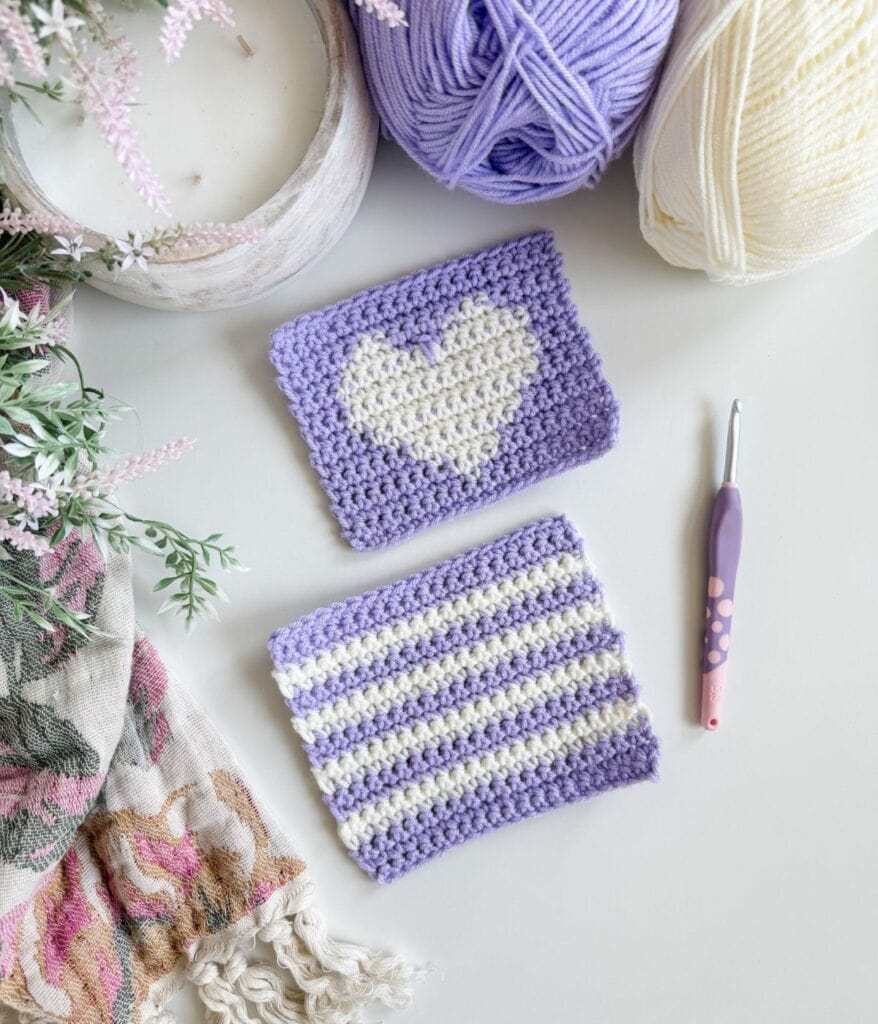
Changing colours in crochet is one of the easiest techniques to learn and opens the door to endless creative possibilities. Whether you’re making stripes, colourwork, tapestry crochet, or mosaic crochet, knowing how to switch colours neatly will give your projects a professional finish.
In this Learn to Crochet tutorial, you’ll learn how to change colours in the middle of a row, at the end of a row, and how to carry yarn up the side of your work to create neat stripes with fewer ends to weave in. These simple techniques are perfect for striped blankets, colourwork, tapestry crochet, and many other colourful crochet projects!
Whether you’re a beginner or just looking to improve your colour changes, this tutorial will help you crochet with confidence.
Watch the Video Tutorial
Prefer to learn by watching?

Want less distractions?
Join Off the Hook Crochet Club
Join the Off The Hook Crochet Club and enjoy hundreds of MJ’s crochet patterns ad-free, plus exclusive resources, member perks and new free patterns added every week.
In this step-by-step video tutorial, I’ll demonstrate:
- How to change colour in the middle of a row
- Two different methods for changing colours
- How to carry yarn across a row
- How to change colour at the end of a row
- How to carry yarn up the side of your work
- Tips for keeping your colour changes neat
Materials
For this tutorial, I used:
- Mary Maxim Maximum Value Yarn (CDN link) Worsted weight #4
- 5.5 mm (I) Crochet Hook
- Scissors
- Yarn Needle (optional)
Method 1: Changing Colour Through the Centre of a Row
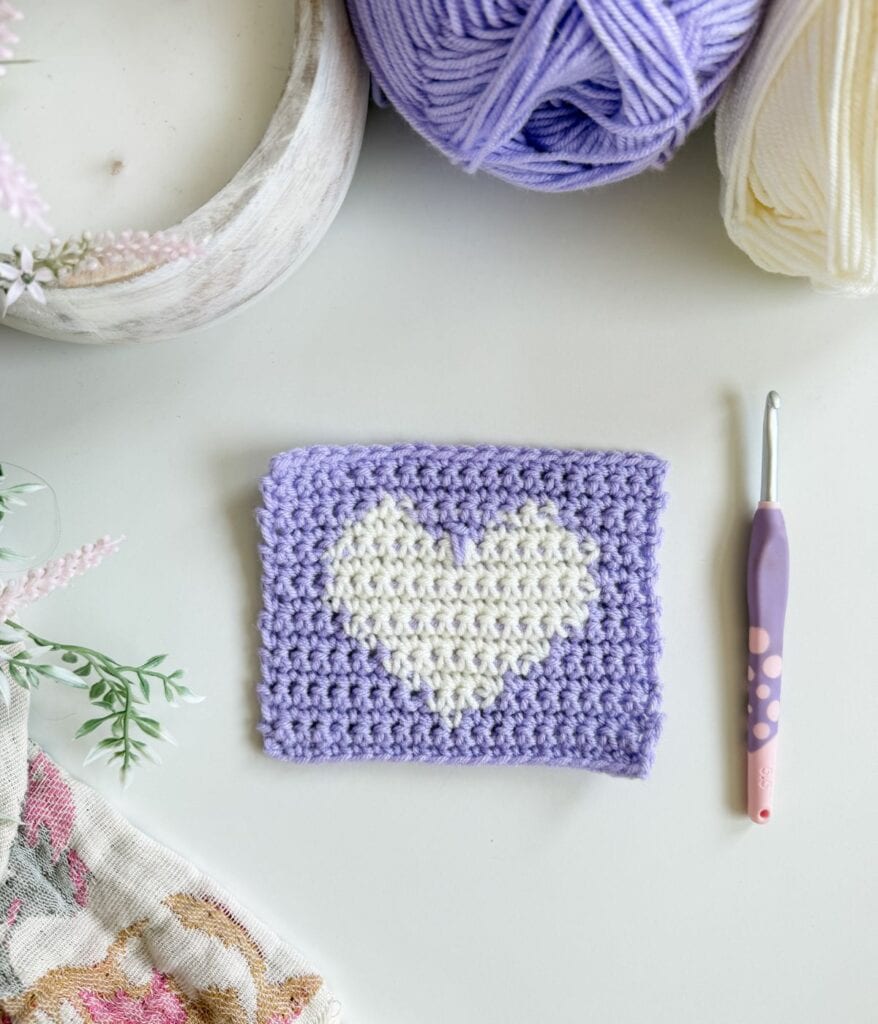
My favourite way to change colours in the middle of a row is by working through the two loops (or bars) of the stitch and pulling the new colour through.
This method creates a clean colour change while allowing you to continue carrying the previous colour if needed.
Best for:
- Colourwork
- Graphghans
- Small colour sections
- Carrying yarn across a row
Method 2: Change Colour on the Last Yarn Over
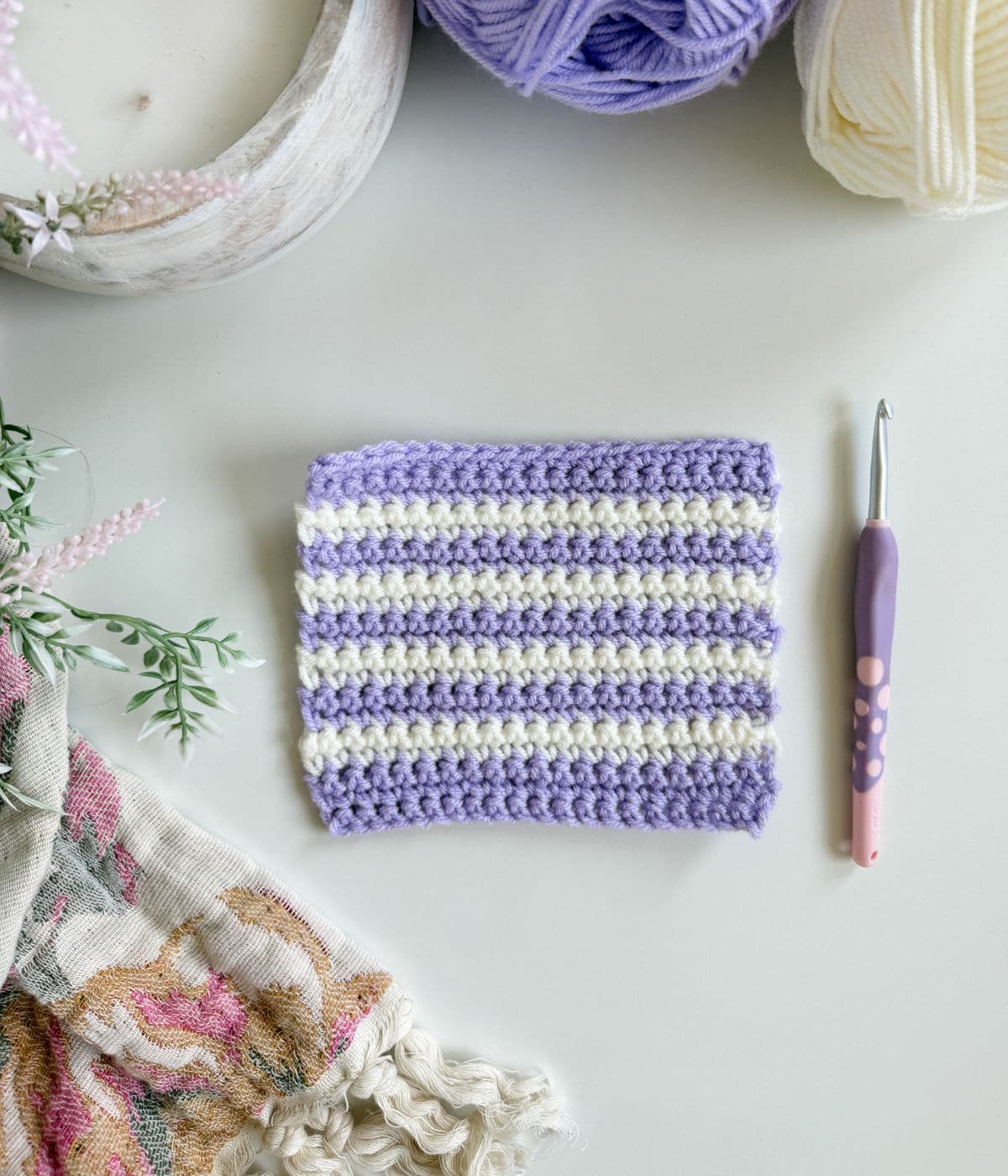
Many crochet patterns will instruct you to change colour on the last yarn over of the stitch.
Instead of completing the stitch with the current colour, simply yarn over with the new colour and finish the stitch.
This is the traditional method you’ll see written in most crochet patterns.
Best for:
- Stripes
- Following written patterns
- Any crochet stitch
Carrying Yarn Across the Row
If you’ll be using the colour again within a few stitches, you don’t need to cut the yarn.
Instead:
- Lay the unused yarn across the top of your stitches.
- Crochet over it as you work.
- Keep the carried yarn slightly taut.
- Avoid pulling too tightly, which can cause puckering.
How to Change Colour at the End of a Row
Changing colours at the end of a row is perfect for creating stripes.
Simply:
Would you like to save this?
You can unsubscribe at any time.
- Work the final stitch until the last yarn over.
- Yarn over with the new colour.
- Complete the stitch.
- Chain and turn as instructed.
The next row will begin in the new colour.
How to Carry Yarn Up the Side
One of my favourite tricks for striped projects is carrying the yarn up the side instead of cutting it every time.
If you’re working an even number of rows in each colour:
- Crochet over the tail in the first stitch.
- Drop the unused colour.
- Work your rows.
- Pick it back up when needed.
- Continue carrying it up the side.
This technique works beautifully for:
- Blankets
- Scarves
- Garments
- Sweaters
- Any striped crochet project
Later, the edge can easily be hidden inside a seam or covered with a border.ggnb
When Should You Cut the Yarn?
Sometimes carrying yarn isn’t the best option.
Consider cutting your yarn when:
- The colour won’t be used again for many rows.
- You’re carrying the yarn a long distance across a row.
- The carried yarn would show through the front of your work.
Using separate bobbins or small yarn balls is often the better choice for larger colourwork sections.
Common Colour Change Mistakes
Pulling the carried yarn too tightly
This can cause the fabric to pucker.
Leaving the carried yarn too loose
Loose floats may catch on fingers or show through the fabric.
Forgetting to keep tails on the wrong side
Always position your tails toward the wrong side of the project whenever possible.
Cutting yarn too often
If you’re making stripes, carrying the yarn up the side can save a tremendous amount of finishing time.
Changing colour on the last yarn over is the easiest and most commonly used method for beginners. As you gain confidence, you can experiment with carrying yarn and other colourwork techniques.
Carry the yarn up the side of your work instead of cutting it after every stripe. This works best when you’re working an even number of rows in each colour.
Yes. If the colour change is only a short distance away, crocheting over the carried yarn is an easy way to hide it.
No! Many projects allow you to carry the yarn across a row or up the side of your work, eliminating extra ends to weave in.
More Learn to Crochet Tutorials
Looking to build your crochet skills?
Be sure to check out the rest of our Learn to Crochet Series, where you’ll find beginner friendly tutorials covering everything from reading patterns to mastering new stitches and techniques.
Helpful Resources
Sign up for our YouTube Membership
Join our Facebook Crochet Community for pattern support and inspiration
Subscribe on YouTube for hundreds of free tutorials
Sign up for our newsletter and receive 40% off your first Ravelry purchase!
What’s Next
This lesson is part of the Learn to Crochet course by Michelle Moore of MJ’s Off The Hook Designs Inc, based in Lakefield, Ontario, Canada.
Thank you for learning with me at MJ’s Off The Hook Designs. I hope this lesson encourages you to keep practising and enjoying the process of crochet.
You’ve got questions, we’ve got a community!
Crocheting is better with friends! Join our group to post pictures and ask all your pattern support questions.